More About This Card
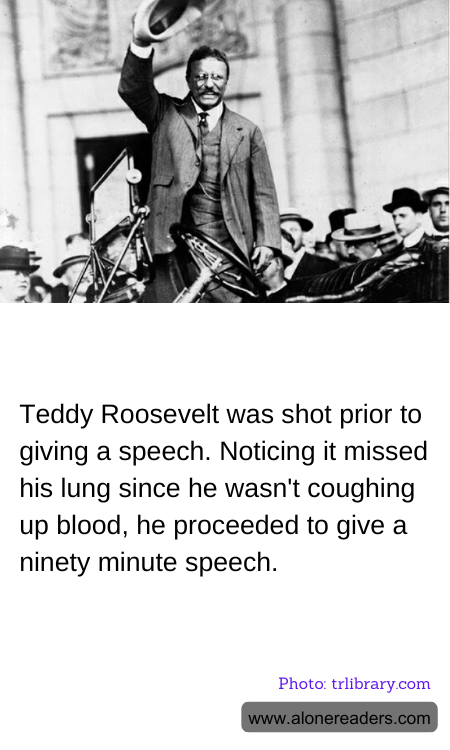
On October 14, 1912, Theodore Roosevelt, the 26th President of the United States, demonstrated extraordinary resilience and determination in the face of danger. While campaigning for a third term as a candidate for the Progressive Party, Roosevelt was in Milwaukee, Wisconsin, preparing to deliver a speech. As he stood outside the Gilpatrick Hotel, greeting supporters, a would-be assassin, John Schrank, fired a .38 caliber revolver at him from close range.
The bullet struck Roosevelt in the chest, but remarkably, it did not stop him from proceeding with his plans. The bullet had been slowed by a steel eyeglass case and a thick, folded copy of the speech he was about to deliver, which he had tucked into his jacket pocket. Despite the impact, Roosevelt quickly assessed his condition. Noticing that he was not coughing up blood, he concluded that the bullet had not penetrated his lung, a potentially life-threatening injury.
Displaying remarkable composure and presence of mind, Roosevelt insisted on delivering his speech as planned. He reassured the crowd, famously stating, "Ladies and gentlemen, I don't know whether you fully understand that I have just been shot; but it takes more than that to kill a Bull Moose." The nickname "Bull Moose" was a reference to his Progressive Party, which he often described as being as strong as a bull moose.
For the next ninety minutes, Roosevelt spoke to the audience, holding their attention with his characteristic vigor and passion. His speech, which focused on the issues of the day and his vision for the country, was delivered with the bullet still lodged in his chest. His determination and courage captivated the nation, further cementing his reputation as a fearless leader.
After the speech, Roosevelt was taken to a nearby hospital, where doctors confirmed that the bullet had indeed lodged in his chest muscle but had not caused any serious damage. Given the potential risks of surgery, the decision was made to leave the bullet in place, and Roosevelt carried it with him for the rest of his life.
This remarkable incident is a testament to Roosevelt's indomitable spirit and dedication to his principles. It highlights his belief in perseverance and his commitment to serving the American people, even in the face of personal danger. Roosevelt's actions on that day continue to inspire people of all ages, reminding us of the power of courage and conviction in the pursuit of one's ideals.