More About This Card
Sigmund Freud, the father of psychoanalysis, is a towering figure in the history of psychology. His theories on the unconscious mind, dreams, and human behavior have left an indelible mark on the field. However, one lesser-known aspect of Freud's life is his early enthusiasm for cocaine, a substance that was not only legal at the time but also widely regarded as a wonder drug.
In the late 19th century, cocaine was hailed for its potential to treat a variety of ailments, from depression to fatigue. Freud, who was always on the lookout for new treatments and ideas, became an ardent advocate for the drug. He first encountered cocaine in the early 1880s and was immediately impressed by its effects. Freud believed that cocaine could be a panacea for many of the psychological and physical issues of his time. He wrote several papers extolling its virtues, suggesting it as a treatment for everything from morphine addiction to mental disorders.
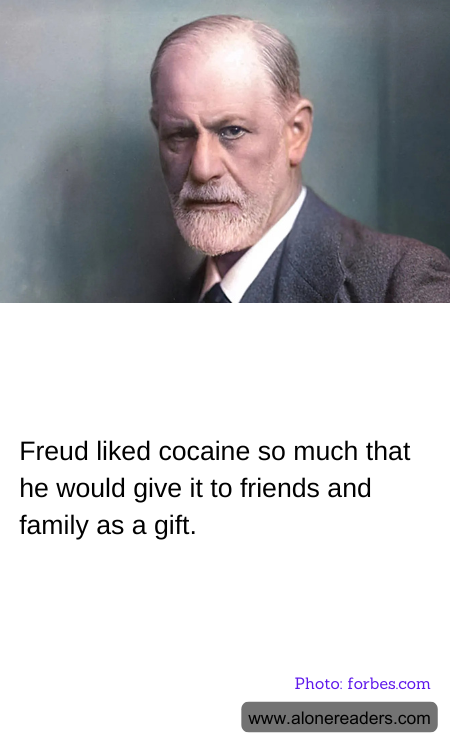
Freud's enthusiasm for cocaine extended beyond his professional work. He was known to share the drug with friends and family, often giving it as a gift. At the time, this was not considered unusual or irresponsible. Cocaine was marketed as a tonic and was even an ingredient in popular products like Coca-Cola. Freud's intentions were likely rooted in genuine belief in the drug's benefits, as he saw it as a means to enhance mood, energy, and overall well-being.
However, Freud's relationship with cocaine was not without its consequences. While he initially viewed it as a harmless stimulant, he eventually recognized its potential for addiction and abuse. This realization came after witnessing the negative effects it had on some of his patients and colleagues. Despite this, Freud's early advocacy for cocaine remains a controversial chapter in his life and career.
Today, Freud's experimentation with cocaine is often viewed through the lens of historical context. It serves as a reminder of how medical and scientific understanding evolves over time. What was once considered a miracle cure is now recognized as a substance with significant risks and potential for harm. Freud's story highlights the importance of ongoing research and critical evaluation in the field of medicine.
In retrospect, Freud's fascination with cocaine is a testament to the complexities of scientific exploration and the human desire to find solutions to life's challenges. While his early support for the drug may seem misguided by today's standards, it underscores the ever-changing nature of medical knowledge and the need for caution in embracing new treatments. Freud's legacy, though marked by this curious chapter, continues to inspire and provoke thought in the world of psychology and beyond.