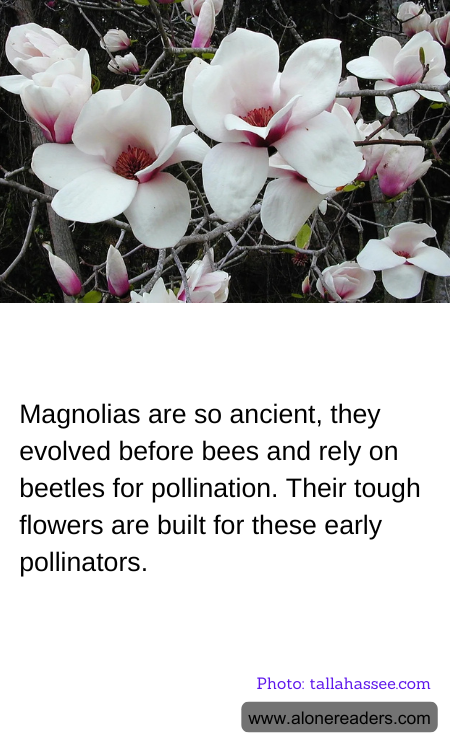
Magnolias are a fascinating group of flowering plants that have captured the imagination of botanists and nature enthusiasts alike. These ancient plants have a rich history that dates back millions of years, long before the appearance of bees, which are now the most common pollinators for many flowering plants. Instead, magnolias have evolved a unique relationship with beetles, which serve as their primary pollinators. This intriguing partnership highlights the remarkable adaptability and resilience of magnolias in the face of evolutionary changes.
The origins of magnolias can be traced back to the Cretaceous period, around 95 million years ago. During this time, the world was a very different place, with dinosaurs roaming the Earth and the first flowering plants beginning to emerge. Bees, which are now ubiquitous pollinators, had not yet evolved. Instead, beetles were among the earliest insects to interact with flowering plants. Magnolias, with their robust and sturdy flowers, were perfectly suited to withstand the clumsy movements of these early pollinators.
The flowers of magnolias are built to accommodate beetles in several ways. Their thick, waxy petals are designed to endure the rough handling by beetles as they crawl over the blooms in search of pollen and nectar. Unlike the delicate petals of many modern flowers, magnolia petals are tough and resilient, ensuring that they remain intact even after repeated visits by these early pollinators. Additionally, magnolias produce a large amount of pollen, which serves as a food source for beetles. This abundance of pollen not only attracts beetles but also ensures that enough pollen is transferred from flower to flower, facilitating successful pollination.
The relationship between magnolias and beetles is a testament to the power of co-evolution. Over millions of years, both the plants and their insect partners have adapted to each other's presence, resulting in a mutually beneficial relationship. While magnolias provide food and shelter for beetles, the beetles, in turn, help the plants reproduce by transferring pollen. This ancient partnership has allowed magnolias to thrive across different environments and continents, from the forests of North America to the tropical regions of Asia.
Today, magnolias are celebrated not only for their historical significance but also for their stunning beauty. Their large, fragrant flowers are a favorite among gardeners and landscapers, adding a touch of elegance and grace to any setting. Despite the changes in their environment and the emergence of new pollinators like bees, magnolias continue to rely on their ancient allies, the beetles, to ensure their survival and propagation.
In a world where many plant and animal species face the threat of extinction, the enduring relationship between magnolias and beetles serves as a reminder of the resilience of nature. It highlights the importance of preserving biodiversity and understanding the intricate connections that sustain life on our planet. As we admire the beauty of magnolias, we are also witnessing a living legacy of evolution, a testament to the enduring power of nature's partnerships.
