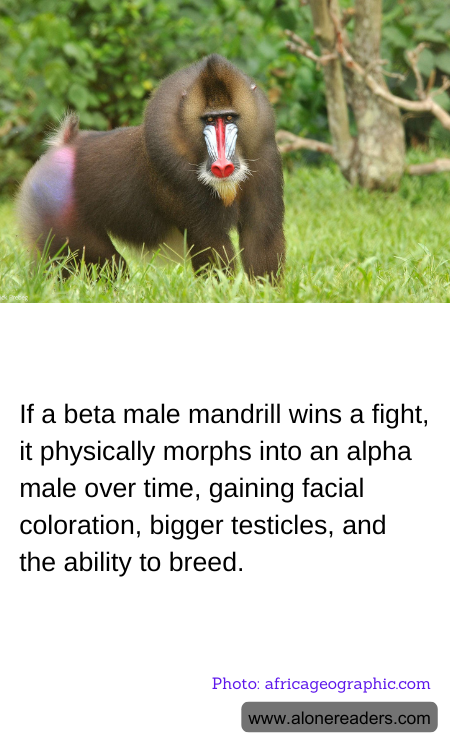
In the vibrant and competitive world of mandrills, a fascinating phenomenon occurs that challenges our understanding of social hierarchies and physical transformation. Mandrills, known for their striking facial coloration and complex social structures, exhibit a unique biological response to changes in their social status. When a beta male mandrill triumphs in a fight, it undergoes a remarkable physical transformation, gradually morphing into an alpha male. This transformation is not just a change in behavior but is accompanied by significant physiological changes, including enhanced facial coloration, increased testicle size, and the newfound ability to breed.
Mandrills are the largest species of monkeys and are native to the rainforests of Central Africa. They are easily recognizable by their vivid blue and red facial markings, which are more pronounced in dominant males. In mandrill society, alpha males are at the top of the social ladder, commanding respect and access to mating opportunities. These males are distinguished by their bright facial colors and larger physical size, traits that signal their dominance and genetic fitness to potential mates.
The transformation from a beta to an alpha male is triggered by a change in social status, often following a successful challenge or fight. When a beta male wins a fight, it experiences a surge in testosterone levels, which initiates a series of physiological changes. Over time, the male's facial colors become more vibrant, a visual cue that signifies its new status. Additionally, the male's testicles increase in size, a change that enhances its reproductive capabilities and attractiveness to females.
This transformation is not merely cosmetic; it plays a crucial role in the mandrill's social dynamics. The enhanced coloration and increased size of the alpha male serve as signals to other members of the group, reinforcing its new position and deterring potential challengers. The ability to breed is a significant advantage, as it allows the newly transformed alpha male to pass on its genes, ensuring the continuation of its lineage.
The process by which a beta male mandrill becomes an alpha is a testament to the intricate relationship between social behavior and physical adaptation in the animal kingdom. It highlights the dynamic nature of mandrill societies, where power and status are not fixed but can change based on individual actions and outcomes. This phenomenon also underscores the importance of physical traits as indicators of social status and reproductive potential in the wild.
In conclusion, the transformation of a beta male mandrill into an alpha male following a victorious fight is a captivating example of nature's adaptability and the complex interplay between biology and social structure. It serves as a reminder of the ever-evolving dynamics within animal communities and the remarkable ways in which creatures adapt to their environments to survive and thrive.
