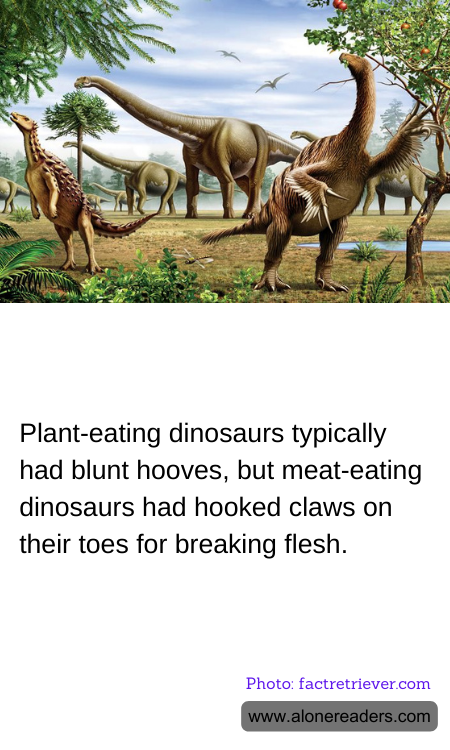
Dinosaurs, the magnificent creatures that roamed the Earth millions of years ago, have long fascinated scientists and enthusiasts alike. Among the many intriguing aspects of these prehistoric giants is the distinct difference in their foot anatomy, particularly between plant-eating and meat-eating species. This divergence in foot structure is a testament to the diverse ecological roles these creatures played and their adaptations to their respective diets.
Plant-eating dinosaurs, known as herbivores, typically had blunt hooves. These hooves were well-suited for their lifestyle, which involved traversing vast landscapes in search of vegetation. The bluntness of their hooves provided stability and support, allowing these massive creatures to bear their weight as they moved across different terrains. This adaptation was crucial for herbivores like the Triceratops and Brachiosaurus, which needed to travel long distances to find enough food to sustain their large bodies. The hooves also helped in digging and foraging for plants, roots, and other vegetation, ensuring they could access a variety of food sources.
In stark contrast, meat-eating dinosaurs, or carnivores, were equipped with hooked claws on their toes. These claws were sharp and curved, designed specifically for hunting and breaking flesh. Carnivorous dinosaurs, such as the fearsome Tyrannosaurus rex and the agile Velociraptor, relied on these claws to capture and subdue their prey. The hooked design allowed them to grip tightly onto their targets, preventing escape and enabling them to deliver fatal blows. This adaptation was essential for their survival, as it allowed them to efficiently hunt and consume other animals, securing their place as top predators in the prehistoric food chain.
The differences in foot anatomy between herbivorous and carnivorous dinosaurs highlight the incredible diversity of life during the Mesozoic Era. These adaptations were not merely physical traits but were integral to the survival strategies of each group. Herbivores developed features that allowed them to efficiently gather and process plant material, while carnivores evolved tools for hunting and consuming meat. This specialization ensured that both groups could thrive in their respective ecological niches, contributing to the rich tapestry of life that characterized the age of dinosaurs.
Understanding these adaptations provides valuable insights into the evolutionary pressures that shaped the lives of dinosaurs. It also underscores the importance of anatomical features in determining the behavior and lifestyle of different species. As paleontologists continue to uncover new fossils and study these ancient creatures, the story of dinosaurs becomes ever more detailed and fascinating, offering a glimpse into a world that, while long gone, continues to captivate our imagination.
