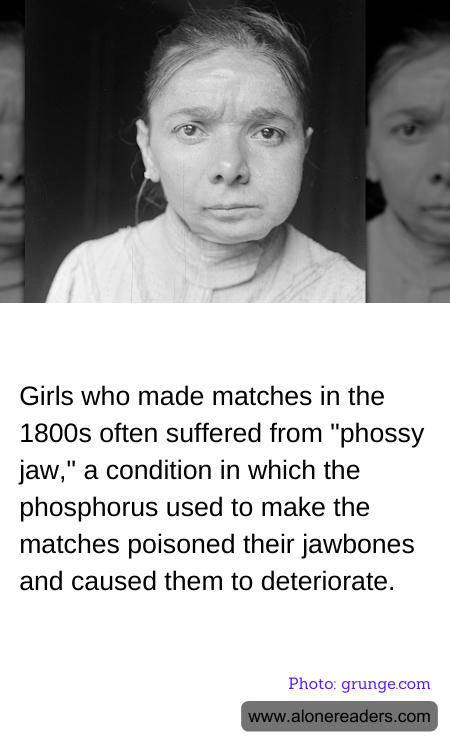
In the 19th century, the matchstick industry was booming, driven by the demand for a convenient way to ignite fires. However, behind the scenes of this seemingly innocuous product lay a grim reality for many of the workers, particularly young girls, who were employed in match factories. These workers were often exposed to white phosphorus, a toxic substance used in the production of matches, which led to a debilitating condition known as "phossy jaw."
Phossy jaw, or phosphorus necrosis of the jaw, was a painful and disfiguring disease that affected the jawbones of those who worked with white phosphorus. The condition was characterized by the decay of the jawbone, leading to severe pain, swelling, and the eventual loss of the jaw itself. The disease was not only physically devastating but also socially isolating, as those afflicted were often shunned due to the foul-smelling discharge and visible deformities.
The matchstick industry, particularly in Britain and the United States, employed a large number of young girls and women, who were often from impoverished backgrounds. These workers were tasked with dipping wooden sticks into a mixture containing white phosphorus, a process that exposed them to the toxic fumes. Despite the known dangers, the use of white phosphorus persisted due to its effectiveness in creating matches that ignited easily.
The plight of these workers eventually caught the attention of social reformers and the public. In the late 1800s, campaigns were launched to raise awareness about the hazardous working conditions and to advocate for safer alternatives. One of the most notable efforts was led by social activist Annie Besant, who organized a strike among match factory workers in London in 1888. The strike brought significant attention to the issue and highlighted the need for reform in the industry.
The growing public outcry and the efforts of reformers eventually led to changes in legislation. By the early 20th century, many countries had banned the use of white phosphorus in match production, opting instead for safer alternatives like red phosphorus. This shift not only improved the working conditions for match factory employees but also marked a significant victory in the broader movement for workers' rights and industrial safety.
The story of the girls who suffered from phossy jaw serves as a poignant reminder of the human cost of industrial progress. It underscores the importance of prioritizing the health and safety of workers, particularly those who are most vulnerable. Today, as we continue to navigate the complexities of industrialization and technological advancement, the lessons learned from the past remain relevant, urging us to ensure that progress does not come at the expense of human well-being.
