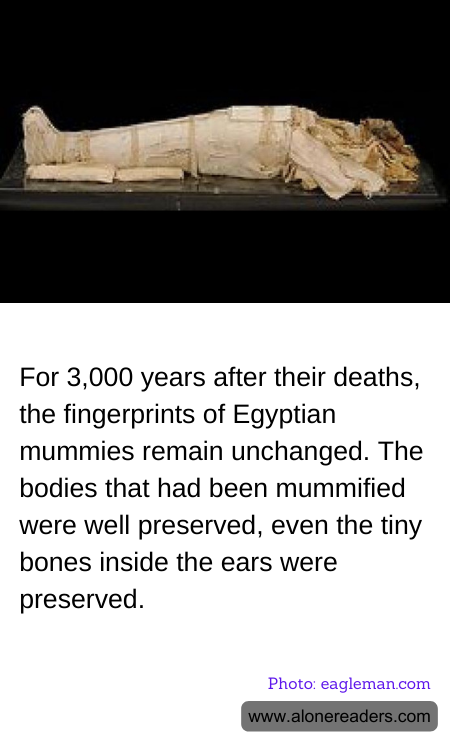
The ancient Egyptians are renowned for their remarkable achievements in art, architecture, and science, but perhaps one of their most fascinating legacies is the practice of mummification. This intricate process of preserving the dead has captivated historians and scientists alike, offering a unique glimpse into the past. One of the most intriguing aspects of mummification is the preservation of fingerprints, which remain unchanged for over 3,000 years after death.
Mummification was a sacred ritual in ancient Egypt, designed to prepare the deceased for the afterlife. The process involved the removal of internal organs, which were often stored in canopic jars, and the desiccation of the body using natron, a naturally occurring salt. The body was then wrapped in linen bandages, sometimes adorned with amulets and other protective charms. This meticulous preservation technique ensured that the physical form of the deceased was maintained, allowing them to be recognized in the afterlife.
What is particularly remarkable is the level of detail that has been preserved in these ancient remains. Fingerprints, which are unique to every individual, have been found intact on mummified bodies, providing a tangible connection to the people who lived thousands of years ago. This preservation is not only a testament to the skill of ancient embalmers but also offers valuable insights for modern forensic science. By studying these ancient fingerprints, researchers can learn more about the identity and social status of the mummified individuals, as well as the techniques used in their preservation.
Beyond fingerprints, the preservation of even the tiniest bones, such as those found inside the ears, highlights the effectiveness of the mummification process. These delicate structures are often among the first to deteriorate after death, yet in many mummies, they remain remarkably intact. This level of preservation provides a wealth of information about the health, diet, and lifestyle of ancient Egyptians, as well as the environmental conditions they lived in.
The study of mummies continues to be a field of great interest and discovery. Advances in technology, such as CT scanning and DNA analysis, have allowed scientists to explore these ancient remains in unprecedented detail, uncovering new information about the lives and deaths of the people of ancient Egypt. As we continue to unravel the mysteries of mummification, we gain not only a deeper understanding of this ancient civilization but also a greater appreciation for the ingenuity and reverence with which they approached the afterlife.
In conclusion, the preservation of fingerprints and other minute details in Egyptian mummies is a testament to the sophistication of ancient embalming techniques. These enduring remnants of the past offer a unique window into a civilization that has long fascinated the world, reminding us of the enduring human desire to connect with those who came before us.
