More About This Card
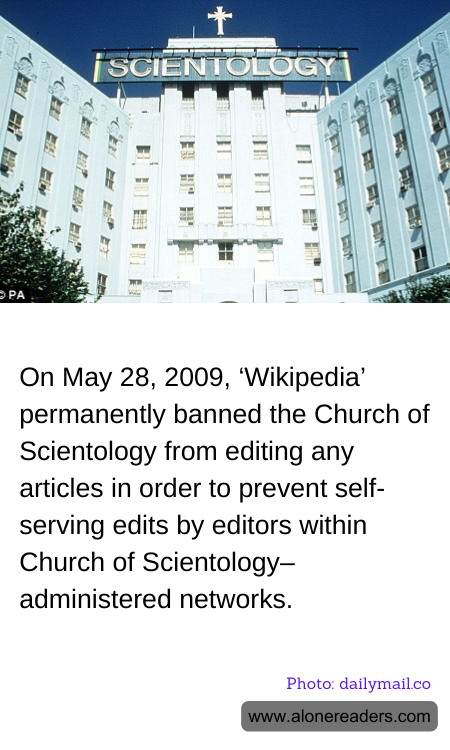
On May 28, 2009, Wikipedia, the world's largest online encyclopedia, took a significant step in maintaining the integrity of its content by permanently banning the Church of Scientology from editing any articles. This decision was made to prevent self-serving edits by individuals associated with the Church of Scientology, who were found to be manipulating content to present a more favorable image of the organization.
Wikipedia, which relies on the contributions of volunteers to create and edit its vast repository of information, has always emphasized the importance of neutrality and verifiability. The platform's guidelines explicitly prohibit conflicts of interest, which occur when editors have a vested interest in the subject matter they are editing. In the case of the Church of Scientology, it was discovered that a network of editors, operating from IP addresses associated with the Church, was systematically altering articles related to Scientology and its founder, L. Ron Hubbard, among other topics.
The decision to impose a ban was not taken lightly. Wikipedia's Arbitration Committee, which is responsible for resolving disputes and enforcing the site's policies, conducted a thorough investigation. The committee found that the Church of Scientology's actions violated Wikipedia's core principles, particularly the requirement for editors to maintain a neutral point of view. The ban was seen as a necessary measure to protect the integrity of the encyclopedia and ensure that its content remained unbiased and reliable.
This move by Wikipedia highlighted the challenges faced by open-source platforms in maintaining the accuracy and neutrality of information. It underscored the potential for organizations and individuals to exploit the collaborative nature of such platforms for their own benefit. By banning the Church of Scientology, Wikipedia set a precedent for how it would handle similar situations in the future, reinforcing its commitment to providing a trustworthy source of information for users worldwide.
The ban also sparked discussions about the broader implications of allowing organizations to edit content about themselves. Critics argued that such practices could lead to misinformation and undermine public trust in online resources. On the other hand, supporters of the ban praised Wikipedia for taking a firm stand against biased editing and for upholding its standards of neutrality.
In the years since the ban, Wikipedia has continued to evolve its policies and practices to address the challenges of maintaining a free and open platform. The incident with the Church of Scientology serves as a reminder of the ongoing need for vigilance in the digital age, where the line between information and propaganda can sometimes blur. As Wikipedia and other platforms strive to provide accurate and impartial information, the lessons learned from this case remain relevant in ensuring that the internet remains a valuable resource for all.