More About This Card
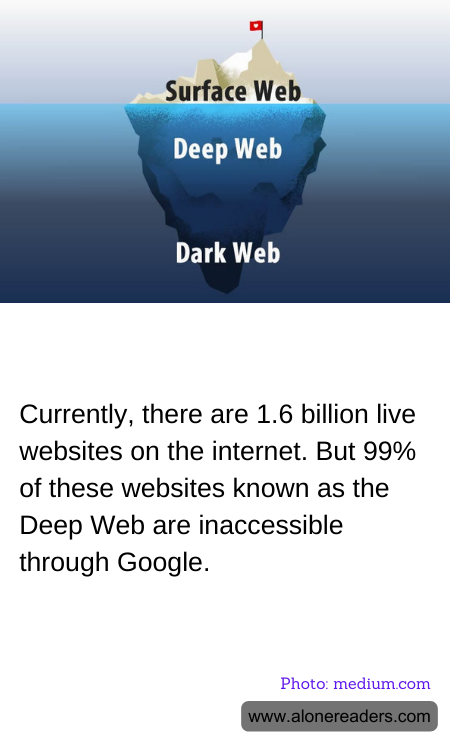
The internet, a vast and ever-expanding digital universe, hosts approximately 1.6 billion live websites. This staggering number reflects the immense growth of online content and the diverse range of information available at our fingertips. However, what many people may not realize is that the majority of these websites are part of what is known as the Deep Web, a hidden realm that remains largely inaccessible through conventional search engines like Google.
The Deep Web is a fascinating and often misunderstood component of the internet. Unlike the Surface Web, which includes websites that are indexed and easily searchable by engines like Google, the Deep Web consists of pages that are not indexed. This means that they cannot be found through standard search queries. The Deep Web is estimated to comprise about 99% of all internet content, a statistic that underscores its vastness and complexity.
The content within the Deep Web is not inherently nefarious or illegal, as is often misconceived. Instead, it includes a wide array of legitimate and benign information. For instance, databases, private corporate sites, academic resources, and personal email accounts all reside within the Deep Web. These sites are typically hidden from search engines to protect sensitive information and maintain privacy. For example, online banking sites and subscription-based services require secure logins and are thus not indexed by search engines to safeguard user data.
Despite its size, the Deep Web is not to be confused with the Dark Web, a small portion of the Deep Web that is intentionally hidden and often associated with illegal activities. The Dark Web requires specific software, configurations, or authorization to access, and it is where illicit activities such as the sale of illegal goods and services can occur. However, it is important to note that the Dark Web represents only a tiny fraction of the Deep Web.
The existence of the Deep Web highlights the limitations of traditional search engines and the importance of understanding the different layers of the internet. While Google and similar platforms provide access to a wealth of information, they only scratch the surface of what is available online. For those seeking to explore the Deep Web for legitimate purposes, specialized search engines and databases can provide access to this hidden trove of information.
In conclusion, the Deep Web is a vast and integral part of the internet, housing a significant portion of the world's digital information. While it remains largely inaccessible through conventional search engines, it plays a crucial role in maintaining the privacy and security of sensitive data. Understanding the distinction between the Surface Web, Deep Web, and Dark Web is essential for navigating the internet safely and effectively. As the digital landscape continues to evolve, the Deep Web will undoubtedly remain a critical component of the online ecosystem.