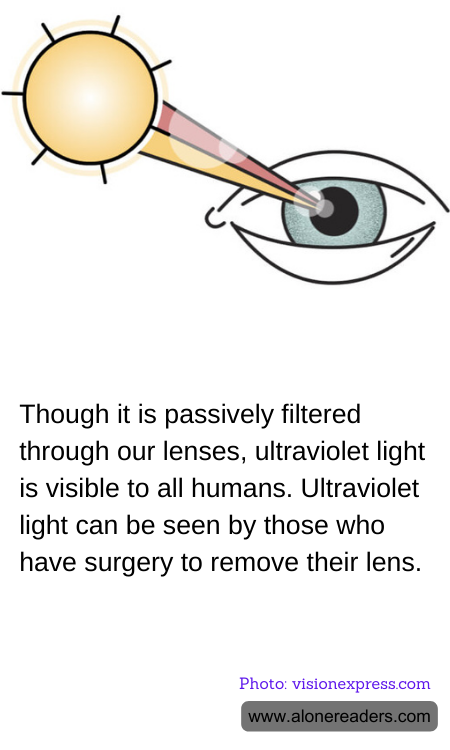
Ultraviolet (UV) light is a type of electromagnetic radiation that is typically invisible to the human eye. It falls just beyond the violet end of the visible light spectrum, which is why it is named "ultraviolet." However, there is a fascinating aspect of UV light that is not widely known: under certain circumstances, humans can actually perceive it.
In the natural state, the human eye cannot see UV light because the lens of the eye filters it out. This is a protective mechanism that prevents potential damage to the retina, as UV light can be harmful in high doses. The lens acts as a barrier, absorbing and blocking these rays from reaching the sensitive tissues at the back of the eye. However, there are instances where this natural filter is altered, allowing UV light to become visible.
One such instance occurs in individuals who have undergone cataract surgery. During this procedure, the eye's natural lens, which has become cloudy, is removed and often replaced with an artificial lens. The artificial lenses used in these surgeries are typically designed to block UV light, but they do not always filter it as effectively as the natural lens. As a result, some people who have had cataract surgery report being able to see UV light. This phenomenon is known as aphakic vision, where the absence of the natural lens allows UV light to reach the retina, making it visible.
The ability to see UV light can be both intriguing and disorienting. Those who experience it often describe seeing a bluish or violet hue that is not present in the normal spectrum of visible light. This can add a new dimension to their visual experience, although it may also require some adjustment as the brain learns to interpret these new signals.
While the ability to see UV light might seem like a superpower, it is important to remember that UV exposure can be harmful. Prolonged exposure to UV light can increase the risk of eye conditions such as cataracts and macular degeneration. Therefore, individuals who have had cataract surgery are often advised to wear sunglasses that block UV rays to protect their eyes.
In conclusion, while ultraviolet light is generally invisible to humans due to the filtering effect of the eye's natural lens, those who have undergone lens removal surgery may gain the unique ability to perceive it. This rare capability offers a glimpse into a part of the electromagnetic spectrum that is usually hidden from human sight, reminding us of the complex and fascinating nature of human vision.
