More About This Card
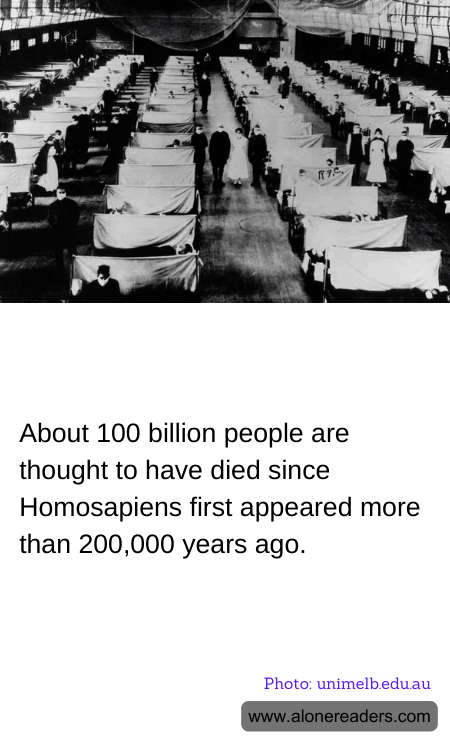
The history of Homo sapiens, our species, stretches back over 200,000 years, a timeline that has seen the rise and fall of countless civilizations, the development of languages and cultures, and the relentless march of progress. Throughout this vast expanse of time, it is estimated that around 100 billion people have lived and died. This staggering number offers a profound perspective on the human journey and the shared experiences that bind us across generations.
The figure of 100 billion is not just a statistic; it represents the cumulative lives of individuals who have contributed to the tapestry of human history. From the earliest hunter-gatherers who roamed the African savannas to the builders of ancient civilizations like Mesopotamia, Egypt, and the Indus Valley, each person played a role in shaping the world we know today. These individuals faced challenges and triumphs, much like we do, and their stories are etched into the collective memory of humanity.
The sheer number of people who have lived and died also highlights the resilience and adaptability of our species. Over millennia, humans have survived ice ages, pandemics, and natural disasters. They have migrated across continents, adapting to diverse environments and developing technologies that have transformed the way we live. This adaptability is a testament to the ingenuity and determination that have driven human progress.
Reflecting on the lives of those who came before us can also inspire a sense of connection and continuity. Despite the vast differences in time, culture, and geography, the fundamental aspects of human life—birth, growth, love, and death—remain constant. This shared human experience fosters empathy and understanding, reminding us that we are part of a larger story that transcends individual lifetimes.
Moreover, considering the number of people who have lived and died prompts us to think about our own place in history. It encourages us to reflect on the legacy we will leave behind and the impact of our actions on future generations. As we navigate the challenges of the modern world, from climate change to social inequality, we are reminded of our responsibility to contribute positively to the ongoing human narrative.
In conclusion, the estimate that around 100 billion people have died since Homo sapiens first appeared is a powerful reminder of the depth and breadth of human history. It underscores the interconnectedness of our lives and the enduring spirit of humanity. As we continue to build on the foundations laid by those who came before us, we are called to honor their memory by striving for a future that reflects the best of what it means to be human.