More About This Card
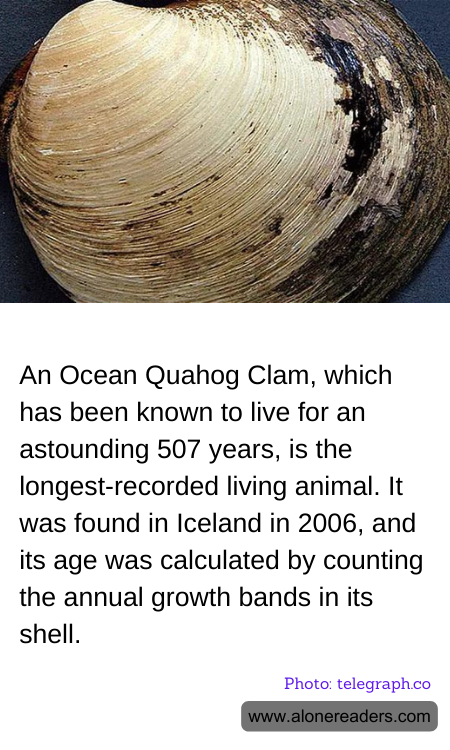
In the vast and mysterious depths of the ocean, where time seems to move at a different pace, lives a creature that has witnessed centuries unfold. The ocean quahog clam, scientifically known as Arctica islandica, holds the remarkable title of the longest-recorded living animal. This unassuming bivalve mollusk, discovered off the coast of Iceland in 2006, astonished scientists with its incredible lifespan of 507 years.
The ocean quahog clam's longevity is a testament to the secrets of the sea and the resilience of life in extreme environments. These clams are found buried in the sandy seabeds of the North Atlantic Ocean, where they thrive in cold, nutrient-rich waters. Their remarkable age was determined by counting the annual growth bands in their shells, much like the rings of a tree. Each band represents a year of life, and the meticulous process of counting these bands revealed the clam's extraordinary age.
The discovery of this ancient clam has sparked curiosity and admiration among scientists and nature enthusiasts alike. It serves as a living archive of environmental changes, offering insights into the ocean's history over the past five centuries. By studying the chemical composition of the clam's shell, researchers can glean valuable information about historical ocean temperatures, salinity levels, and even the impact of human activities on marine ecosystems.
The ocean quahog clam's longevity also raises intriguing questions about the biological mechanisms that enable such extended lifespans. Unlike many other animals, these clams exhibit a slow rate of aging, which scientists believe is linked to their low metabolic rate and the stable, cold environment they inhabit. Understanding these mechanisms could have implications for human health and aging research, potentially unlocking new avenues for extending life and improving healthspan.
Beyond its scientific significance, the ocean quahog clam serves as a poignant reminder of the importance of preserving our oceans and the diverse life forms they harbor. As climate change and human activities continue to threaten marine ecosystems, the survival of such ancient creatures hangs in the balance. Protecting their habitats and ensuring the health of our oceans is crucial for maintaining the delicate balance of life on Earth.
In a world where time often feels fleeting, the ocean quahog clam stands as a symbol of endurance and resilience. Its story invites us to reflect on the wonders of nature and the mysteries that lie beneath the waves. As we continue to explore and understand the depths of our oceans, the lessons from this ancient clam remind us of the interconnectedness of all life and the enduring beauty of our planet.