More About This Card
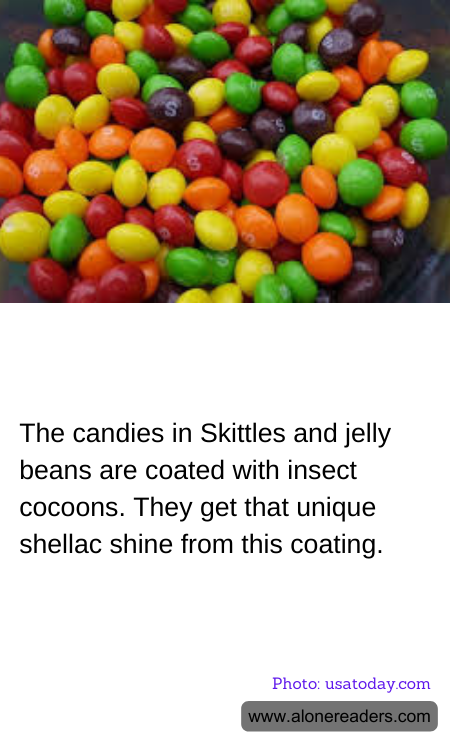
When indulging in a handful of Skittles or jelly beans, most people are captivated by their vibrant colors and irresistible sweetness. However, few are aware of the fascinating process that gives these candies their characteristic glossy finish. The secret lies in a natural resin known as shellac, which is derived from the excretions of the female lac bug, native to the forests of India and Thailand.
Shellac has been used for centuries in various applications, from wood finishes to food coatings. In the world of confectionery, it serves as a crucial ingredient that provides the shiny, hard shell that makes candies like Skittles and jelly beans so visually appealing. The process begins with the collection of lac bug secretions, which are deposited on tree branches in the form of cocoons. These secretions are harvested, processed, and refined into the shellac that is used in food production.
The use of shellac in candies is not only about aesthetics. The coating also serves a functional purpose by acting as a protective barrier. It helps to preserve the candy's flavor and freshness by preventing moisture from penetrating the surface. This ensures that the candies remain enjoyable for longer periods, maintaining their texture and taste.
While the idea of consuming a product derived from insect secretions might initially seem unappetizing, it is important to note that shellac is considered safe for consumption by food safety authorities around the world. It is a natural, non-toxic substance that has been used in the food industry for decades. Moreover, shellac is not exclusive to candies; it is also used in the coating of fruits, pills, and other food items to enhance their appearance and shelf life.
For those who are vegan or have dietary restrictions, it is worth noting that shellac is an animal-derived product. As such, some individuals may choose to avoid candies that contain this ingredient. Fortunately, the confectionery industry is increasingly aware of diverse consumer preferences and is exploring alternative coatings that cater to different dietary needs.
In conclusion, the glossy sheen of Skittles and jelly beans is more than just a visual delight; it is the result of a fascinating natural process involving the lac bug. While it might seem surprising, the use of shellac is a testament to the ingenuity of food science, transforming a humble insect secretion into a key component of our favorite treats. As consumers, understanding the origins of our food can enhance our appreciation for the complex journey from nature to our taste buds.