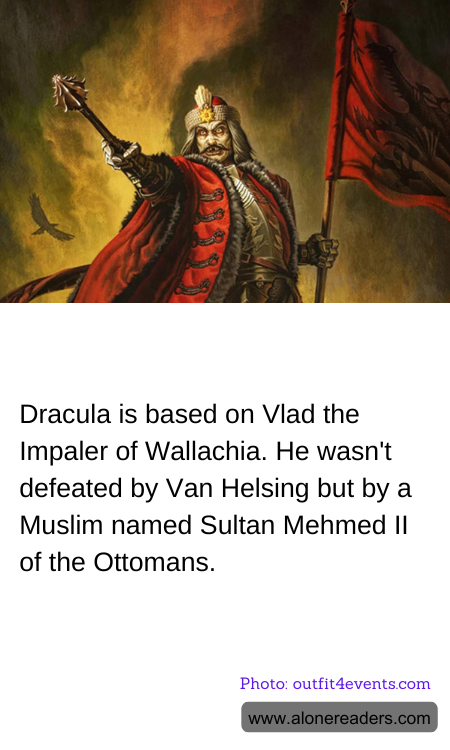
More About This Card
The legendary figure of Dracula has long fascinated readers and moviegoers alike, often depicted as a fearsome vampire vanquished by the fictional Van Helsing. However, the roots of this iconic character are deeply entwined with the historical figure Vlad III, also known as Vlad the Impaler, a 15th-century ruler of Wallachia. Vlad's life and reign were marked by a series of brutal conflicts, not with vampire hunters, but with the formidable Ottoman Empire, led by Sultan Mehmed II.
Vlad the Impaler earned his fearsome moniker due to his preferred method of punishing enemies: impalement. His reign was characterized by a fierce defense of his territory against the encroaching Ottomans. Vlad's reputation for cruelty was not merely a product of legend; it was a strategic tool used to instill fear in his adversaries. His most famous act of defiance was the Night Attack at Târgovi?te in 1462, where he launched a surprise assault on the Ottoman camp, causing significant casualties and sowing chaos among Mehmed II's forces.
Despite his initial successes, Vlad's resistance was ultimately overwhelmed by the might of the Ottoman Empire. Sultan Mehmed II, known as Mehmed the Conqueror, was a formidable leader in his own right, having captured Constantinople in 1453, effectively ending the Byzantine Empire. His military prowess and strategic acumen were unmatched, and he was determined to bring Wallachia under Ottoman control. The conflict between Vlad and Mehmed was not merely a clash of armies but a battle of wits and wills, with both leaders employing psychological warfare and cunning tactics.
Vlad's downfall came not at the hands of a vampire hunter but through the complex political machinations of the time. Betrayed by his own allies and facing insurmountable odds, Vlad was captured and imprisoned by the Hungarians, who were wary of his volatile nature and potential threat. His eventual death in 1476 marked the end of his tumultuous reign, but his legacy lived on, immortalized in the tales of Dracula.
The story of Vlad the Impaler and his battles with Sultan Mehmed II offers a fascinating glimpse into a turbulent period of history, where the lines between legend and reality blur. While Dracula may be a creature of fiction, the real-life exploits of Vlad III continue to captivate and intrigue, reminding us that sometimes, history can be as compelling as any tale spun from the imagination.