More About This Card
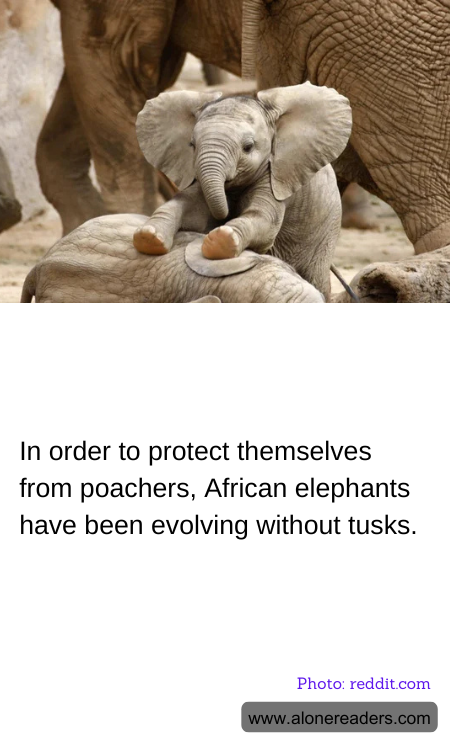
In the vast savannas and dense forests of Africa, a remarkable and somber evolution is unfolding among one of the continent's most iconic species: the African elephant. These majestic creatures, known for their intelligence, social complexity, and, notably, their impressive tusks, are increasingly being born without these defining features. This evolutionary shift is a direct response to the relentless threat posed by poachers, who have long targeted elephants for their ivory.
Tusks, which are elongated incisor teeth, serve various purposes for elephants. They are used for digging, stripping bark from trees, and as tools for defense and dominance displays. However, the value of ivory on the black market has made elephants prime targets for poachers. Over the decades, this illegal hunting has decimated elephant populations, pushing them towards a genetic change that favors tusklessness.
In certain regions of Africa, particularly where poaching has been most intense, the number of tuskless elephants has risen dramatically. For instance, in parts of Mozambique, studies have shown that up to 50% of female elephants are now born without tusks, a stark contrast to the 2-6% observed in the past. This rapid increase in tusklessness is a clear example of natural selection at work. Elephants without tusks are less likely to be targeted by poachers, thus increasing their chances of survival and reproduction. Over time, this has led to a higher proportion of tuskless elephants in the population.
While this adaptation may offer a temporary reprieve from the threat of poaching, it comes with its own set of challenges. Elephants rely on their tusks for various ecological roles, such as accessing water during dry spells and foraging for food. The absence of tusks could potentially alter their behavior and impact the ecosystems they inhabit. Moreover, the genetic diversity of elephant populations may be affected, as the selective pressure against tusks could limit the gene pool.
The rise of tuskless elephants underscores the profound impact human activities can have on wildlife. It serves as a stark reminder of the urgent need for effective conservation efforts to protect these magnificent animals. Anti-poaching initiatives, stricter enforcement of wildlife protection laws, and international cooperation to curb the ivory trade are crucial steps in ensuring the survival of elephants with and without tusks.
Ultimately, the story of the tuskless elephants is a testament to the resilience of nature in the face of adversity. However, it also highlights the responsibility humans have to safeguard the natural world. By addressing the root causes of poaching and fostering a global commitment to conservation, we can hope to preserve the rich biodiversity of our planet for future generations.