More About This Card
The English language, with its rich tapestry of history and evolution, often holds fascinating stories behind the words we use every day. One such intriguing tale is that of the word "orange." Today, it is commonly known as both a fruit and a color, but its journey to this dual identity is a captivating story of linguistic transformation.
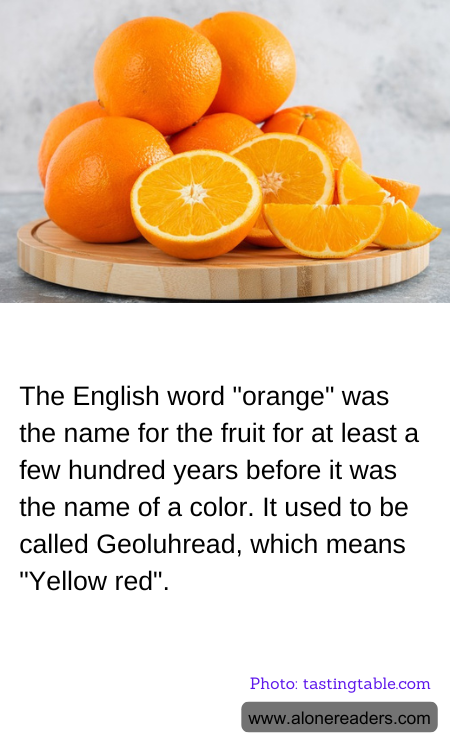
Originally, the word "orange" was solely associated with the fruit. The fruit itself made its way to Europe from Asia, and with it came the Persian word "naranj," which evolved into "naranja" in Spanish. As the fruit became popular in Europe, the word was gradually adopted into English, eventually morphing into "orange." This transition was not immediate, and for several centuries, the word "orange" referred exclusively to the fruit, with no connection to the color we recognize today.
Before the word "orange" was used to describe the color, the English language had a different term: "geoluhread." This Old English word translates to "yellow-red," a descriptive term that aptly captured the hue we now know as orange. The use of "geoluhread" highlights how people in the past perceived and described colors based on their closest associations, often combining existing color names to convey new shades.
The shift from "geoluhread" to "orange" as a color name began in the late Middle Ages and into the Renaissance period. As the fruit became more widespread and familiar, its vibrant hue started to influence the language. The association between the fruit and the color became stronger, eventually leading to the adoption of "orange" as the term for the color itself. This linguistic evolution reflects how language adapts to cultural and societal changes, often borrowing from tangible objects to describe abstract concepts like color.
The story of "orange" is a testament to the dynamic nature of language. It illustrates how words can travel across continents, adapt to new contexts, and evolve over time. This transformation from "geoluhread" to "orange" also underscores the influence of trade and exploration in shaping language, as the introduction of new goods and ideas often necessitates new vocabulary.
In today's world, the word "orange" seamlessly bridges the gap between the fruit and the color, a testament to its rich history and the fluidity of language. This journey from a simple fruit name to a universally recognized color term is a reminder of the intricate and ever-evolving nature of the words we use, reflecting the complex interplay between language, culture, and history.