More About This Card
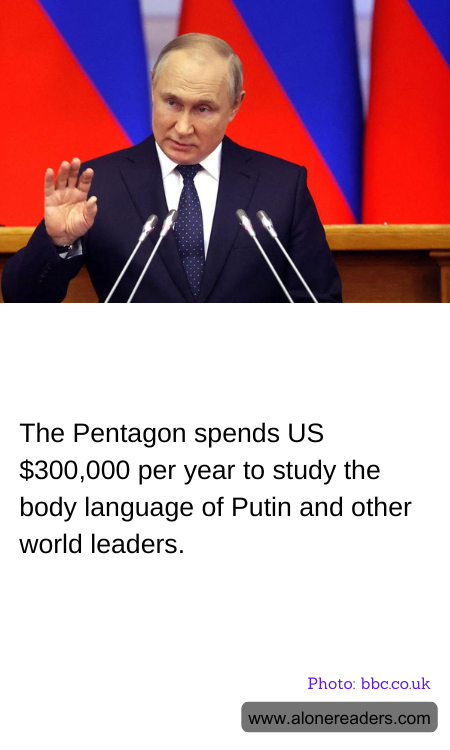
In an era where geopolitical tensions and international diplomacy are at the forefront of global affairs, understanding the nuances of world leaders' behavior has become a priority for many governments. Among these efforts, the Pentagon has allocated an annual budget of $300,000 to study the body language of Russian President Vladimir Putin and other influential global figures. This initiative underscores the importance of non-verbal communication in international relations and the lengths to which nations will go to gain insights into the intentions and strategies of their counterparts.
Body language analysis is a sophisticated field that involves interpreting subtle cues such as facial expressions, gestures, posture, and eye movements. These non-verbal signals can reveal underlying emotions and intentions that might not be apparent through spoken words alone. For the Pentagon, understanding these cues is crucial in anticipating the actions and decisions of world leaders, particularly those who play pivotal roles in global security and diplomacy.
The focus on Vladimir Putin is particularly significant given Russia's prominent position on the world stage and its complex relationship with the United States. Putin, known for his enigmatic and often inscrutable demeanor, presents a unique challenge for analysts. By studying his body language, experts aim to decode his true intentions, whether in the context of military maneuvers, diplomatic negotiations, or public appearances. This information can be invaluable in shaping U.S. foreign policy and strategic planning.
However, the Pentagon's investment in body language analysis extends beyond Putin. The program also examines other key figures whose decisions impact global stability. By broadening the scope of this research, the Pentagon seeks to build a comprehensive understanding of the dynamics at play in international relations. This holistic approach allows for more informed decision-making and enhances the ability to predict and respond to potential crises.
Critics of the program may question the allocation of resources to such an endeavor, arguing that the funds could be better spent elsewhere. However, proponents assert that the insights gained from body language analysis are a vital component of national security strategy. In a world where the stakes are high and the margins for error are slim, any advantage in understanding the motivations of global leaders can be a decisive factor.
Ultimately, the Pentagon's commitment to studying body language reflects a broader recognition of the complexities of modern diplomacy. As the world becomes increasingly interconnected, the ability to interpret the unspoken messages of world leaders is not just an academic exercise but a practical necessity. By investing in this research, the Pentagon aims to stay ahead in the ever-evolving landscape of international relations, ensuring that the United States remains well-prepared to navigate the challenges of the 21st century.