More About This Card
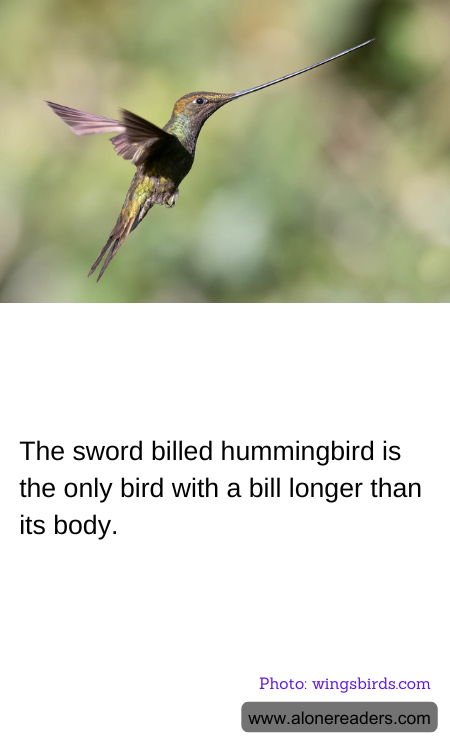
The sword-billed hummingbird, scientifically known as *Ensifera ensifera*, is a remarkable avian species that captivates bird enthusiasts and nature lovers alike. Native to the Andean regions of South America, this extraordinary bird is renowned for its unique physical feature: a bill that is longer than its body. This distinctive adaptation not only sets the sword-billed hummingbird apart from other birds but also plays a crucial role in its survival and ecological interactions.
Measuring approximately 11 to 13 centimeters in length, the sword-billed hummingbird's bill can reach up to 10 centimeters, making it the longest bill relative to body size of any bird species. This elongated bill is an evolutionary marvel, perfectly adapted to access nectar from flowers with long corollas, such as the passionflower and other tubular blossoms found in its mountainous habitat. By reaching deep into these flowers, the hummingbird can feed on nectar that is inaccessible to other pollinators, thus reducing competition and ensuring a reliable food source.
The sword-billed hummingbird's feeding habits also have a significant impact on the ecosystem. As it feeds, the bird inadvertently transfers pollen from one flower to another, playing a vital role in the pollination process. This mutualistic relationship between the hummingbird and the plants it visits highlights the intricate connections within ecosystems and the importance of each species in maintaining ecological balance.
In addition to its impressive bill, the sword-billed hummingbird exhibits other fascinating behaviors. Despite its seemingly cumbersome bill, the bird is an agile flyer, capable of hovering in place while feeding. This ability is supported by its rapid wing beats, which can reach up to 80 beats per second. The hummingbird's iridescent plumage, which shimmers in shades of green and bronze, adds to its allure, making it a favorite subject for photographers and bird watchers.
The sword-billed hummingbird's unique adaptations and ecological role underscore the incredible diversity and complexity of life on Earth. Its existence reminds us of the delicate balance within ecosystems and the importance of conserving habitats that support such specialized species. As human activities continue to impact natural environments, it becomes increasingly crucial to protect the biodiversity that sustains our planet.
In conclusion, the sword-billed hummingbird is a testament to the wonders of evolution and the intricate relationships within nature. Its remarkable bill, longer than its body, is not just a curious feature but a vital adaptation that enables it to thrive in its environment. By appreciating and preserving such extraordinary species, we contribute to the health and resilience of the ecosystems that sustain us all.