More About This Card
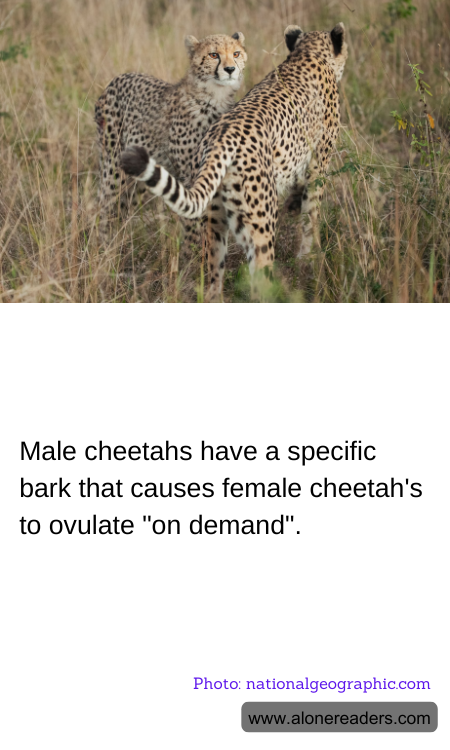
In the vast savannas of Africa, where the golden grasses sway under the gentle caress of the wind, an extraordinary phenomenon unfolds among the fastest land animals on Earth. Male cheetahs, known for their remarkable speed and agility, possess a unique vocalization that plays a crucial role in the continuation of their species. This specific bark, a sound distinct from their usual repertoire of chirps and growls, has the remarkable ability to trigger ovulation in female cheetahs, effectively allowing them to reproduce "on demand."
The cheetah's bark is a fascinating example of nature's ingenuity, serving as a biological cue that synchronizes the reproductive cycles of these magnificent creatures. Unlike many other animals that rely on seasonal changes or environmental cues to dictate mating times, cheetahs have evolved a more flexible approach. This adaptability is vital for their survival, given the challenges they face in the wild, including habitat loss and competition with larger predators.
When a male cheetah emits this bark, it sends a signal to nearby females that he is ready to mate. The sound is not just a call of attraction but a trigger that prompts the female's body to prepare for potential conception. This ability to induce ovulation ensures that mating occurs at the most opportune moment, maximizing the chances of successful reproduction. It is a testament to the cheetah's evolutionary strategy, allowing them to thrive in an environment where timing can mean the difference between life and death.
The science behind this phenomenon is still being explored, but it is believed that the bark may influence hormonal changes in the female cheetah, prompting the release of eggs. This remarkable adaptation not only enhances reproductive success but also contributes to the genetic diversity of the species. By allowing females to ovulate in response to a male's presence, cheetahs can ensure that their offspring inherit a wide range of genetic traits, which is crucial for the health and resilience of the population.
In a world where cheetahs face numerous threats, understanding and preserving their unique reproductive strategies is more important than ever. Conservation efforts are increasingly focusing on protecting these majestic animals and their habitats, ensuring that future generations can witness the breathtaking sight of a cheetah sprinting across the plains. The male cheetah's bark, a simple yet profound sound, is a reminder of the intricate and delicate balance of nature, where even the smallest adaptations can have a profound impact on the survival of a species.
As we continue to learn more about these incredible creatures, the story of the cheetah's bark serves as a powerful example of the wonders of the natural world. It highlights the importance of preserving biodiversity and the need for ongoing research to uncover the secrets of the animal kingdom. In doing so, we not only protect the cheetahs but also enrich our understanding of the complex web of life that sustains us all.