More About This Card
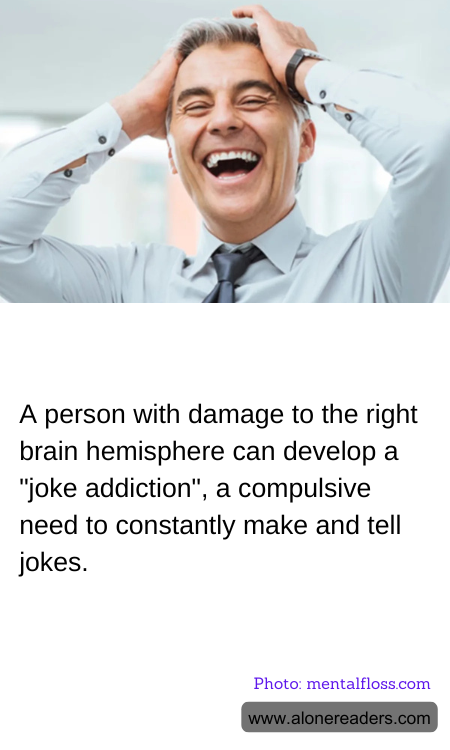
The human brain is a complex organ, with each hemisphere responsible for different functions and abilities. While the left hemisphere is often associated with logical reasoning and language skills, the right hemisphere is known for its role in creativity, spatial abilities, and emotional processing. Damage to the right hemisphere can lead to a variety of unusual symptoms, one of which is a lesser-known phenomenon known as "joke addiction."
Joke addiction, or Witzelsucht, is a rare condition where an individual develops a compulsive need to make and tell jokes. This condition is often linked to damage in the right frontal lobe of the brain. People with Witzelsucht may find themselves unable to resist the urge to create puns, tell jokes, or engage in humorous banter, often at inappropriate times. This behavior can be both amusing and disruptive, as the individual may not be able to discern when their humor is welcome or when it might be considered intrusive.
The underlying mechanisms of joke addiction are not entirely understood, but it is believed that the damage to the right hemisphere affects the brain's ability to regulate social behavior and emotional responses. This can lead to a disinhibition of humor, where the person loses the ability to control their urge to joke. The condition can also be accompanied by other symptoms, such as a lack of empathy, difficulty in understanding social cues, and a diminished ability to recognize the emotional states of others.
While the idea of someone compulsively telling jokes might seem entertaining, it can pose significant challenges for the individual and those around them. Social interactions can become strained, as the constant joking may be perceived as inappropriate or insensitive. In some cases, the individual may become socially isolated, as friends and family struggle to cope with the incessant humor.
Treatment for joke addiction typically involves a combination of therapies aimed at helping the individual regain control over their behavior. Cognitive-behavioral therapy can be effective in teaching the person to recognize and modify their compulsive tendencies. In some cases, medication may be prescribed to help manage any underlying neurological issues contributing to the condition.
Despite the challenges it presents, joke addiction offers a fascinating glimpse into the complexities of the human brain and the delicate balance of its functions. It serves as a reminder of the intricate ways in which our brains shape our personalities and behaviors. For those affected by this condition, understanding and support from loved ones, along with appropriate medical intervention, can make a significant difference in managing the symptoms and improving quality of life.