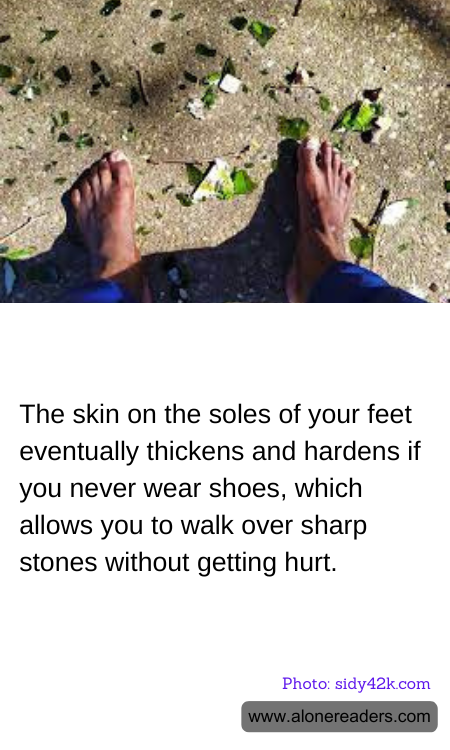
Walking barefoot is a practice that has been embraced by various cultures throughout history. While modern society often emphasizes the importance of footwear for protection and comfort, there is a fascinating adaptation that occurs when individuals consistently go without shoes. Over time, the skin on the soles of the feet thickens and hardens, creating a natural shield that allows people to traverse rough terrains, including sharp stones, without injury.
This remarkable transformation is a result of the body's natural response to repeated exposure to different surfaces. When the feet are consistently in contact with the ground, the outer layer of skin, known as the epidermis, begins to thicken. This process, called hyperkeratosis, is the body's way of fortifying the skin against potential damage. The thickened skin acts as a protective barrier, reducing the sensitivity of nerve endings and minimizing the risk of cuts or abrasions.
The benefits of walking barefoot extend beyond just physical protection. Many proponents of barefoot walking argue that it can lead to improved foot health and posture. Without the constraints of shoes, the muscles in the feet and legs are engaged more fully, promoting better balance and alignment. Additionally, walking barefoot can enhance proprioception, which is the body's ability to sense its position and movement in space. This heightened awareness can lead to more mindful and grounded movement.
However, transitioning to a barefoot lifestyle requires time and patience. For those accustomed to wearing shoes, the initial experience of walking barefoot can be uncomfortable. The feet need time to adapt and develop the necessary toughness. It is advisable to start on softer surfaces, such as grass or sand, before gradually moving to more challenging terrains. This gradual approach allows the skin to thicken naturally without causing undue stress or injury.
While the idea of walking barefoot might seem unconventional to some, it is important to recognize that this practice is deeply rooted in human history. Before the advent of modern footwear, our ancestors relied on their naturally toughened feet to navigate diverse landscapes. Today, many people around the world continue to embrace this natural approach, finding joy and freedom in the simple act of walking without shoes.
In conclusion, the thickening and hardening of the skin on the soles of the feet is a testament to the body's incredible ability to adapt to its environment. By allowing our feet to connect directly with the earth, we not only build resilience against physical challenges but also reconnect with a more primal and instinctive way of moving. Whether for health, spiritual, or personal reasons, walking barefoot offers a unique opportunity to explore the world in a more natural and grounded manner.
