More About This Card
The ancient Egyptian civilization is renowned for its remarkable achievements in various fields, including architecture, art, and medicine. Among their most fascinating practices was the art of mummification, a meticulous process aimed at preserving the body for the afterlife. One of the most intriguing aspects of this process was the removal of the brain, which was done in a manner that continues to captivate historians and archaeologists alike.
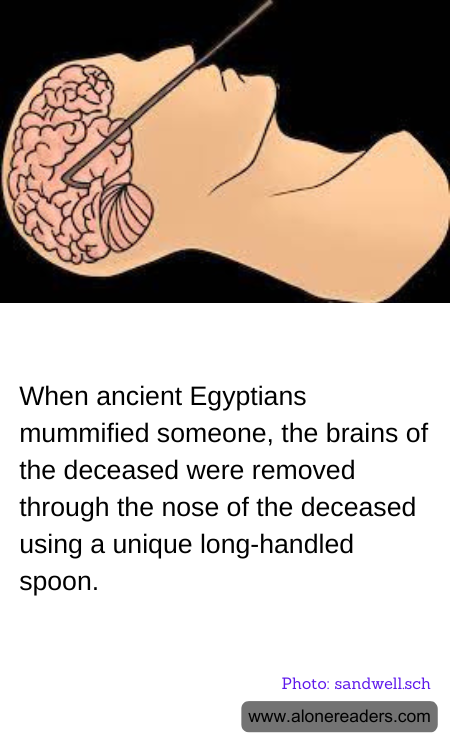
In ancient Egyptian belief, the heart was considered the seat of intelligence and emotion, while the brain was deemed relatively unimportant. As a result, during mummification, the brain was often removed and discarded. This was accomplished through a rather unique and somewhat startling method. The embalmers would insert a long-handled spoon-like instrument through the nostril of the deceased. This tool, known as a brain hook, was used to carefully break down the brain tissue, which was then extracted in small pieces. This procedure required great skill and precision, as the embalmers had to avoid damaging the delicate structures of the face.
The process of brain removal was just one step in the elaborate ritual of mummification, which could take up to 70 days to complete. After the brain was removed, the body was cleansed and dehydrated using a naturally occurring salt called natron. This helped to prevent decay and prepared the body for the next stages of preservation. The internal organs, except for the heart, were also removed and treated separately. These organs were often stored in canopic jars, which were placed in the tomb alongside the mummy.
The ancient Egyptians believed that preserving the body was essential for the deceased to enjoy a successful journey to the afterlife. The mummification process was deeply rooted in their spiritual beliefs and was reserved for those who could afford it, typically pharaohs, nobles, and other high-ranking individuals. The care and attention given to the mummification process reflect the Egyptians' profound respect for the dead and their desire to ensure a safe passage to the next world.
Today, the practice of mummification offers a window into the past, providing valuable insights into the religious and cultural practices of ancient Egypt. The removal of the brain through the nose, in particular, highlights the ingenuity and skill of ancient embalmers. It serves as a testament to the lengths to which the Egyptians went to honor their dead and underscores the complexity of their beliefs about life, death, and the afterlife. As we continue to study these ancient practices, we gain a deeper appreciation for the rich tapestry of human history and the enduring legacy of one of the world's most fascinating civilizations.