More About This Card
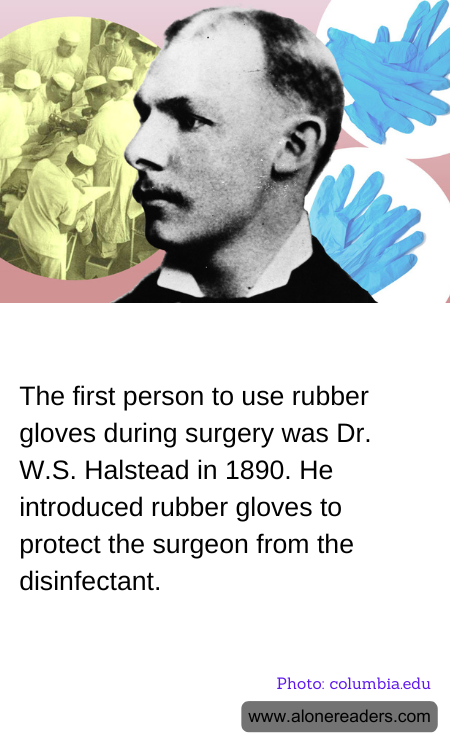
In the late 19th century, the field of surgery was undergoing significant transformations, driven by the burgeoning understanding of germ theory and the necessity for sterile environments. Among the pivotal figures in this era was Dr. William Stewart Halsted, a pioneering American surgeon whose contributions to surgical practice were both innovative and transformative. One of his most enduring legacies is the introduction of rubber gloves in the operating room, a practice that has become a cornerstone of modern surgical procedures.
The story of rubber gloves in surgery begins in 1890 at Johns Hopkins Hospital in Baltimore, Maryland, where Dr. Halsted was the first chief of surgery. At the time, the use of carbolic acid and other harsh disinfectants was common practice to sterilize surgical instruments and hands. However, these substances often caused skin irritation and dermatitis, particularly for those with sensitive skin. Dr. Halsted's primary motivation for introducing rubber gloves was not initially to prevent infection, but rather to protect the hands of his scrub nurse, Caroline Hampton, who later became his wife. Hampton suffered from severe dermatitis due to the disinfectants used during surgeries, prompting Halsted to seek a solution.
Dr. Halsted approached the Goodyear Rubber Company to create thin, flexible rubber gloves that could be worn during operations. These gloves provided a protective barrier against the irritating chemicals, allowing Hampton to perform her duties without discomfort. The introduction of rubber gloves was initially met with skepticism by some of Halsted's contemporaries, who were accustomed to performing surgeries with bare hands. However, the benefits soon became apparent, as the gloves not only protected the skin but also inadvertently reduced the risk of infection by providing a sterile barrier between the surgeon and the patient.
As the use of rubber gloves spread, their impact on surgical outcomes became increasingly evident. The gloves helped to minimize the transmission of bacteria and other pathogens, significantly reducing postoperative infections and improving patient recovery rates. This innovation marked a turning point in surgical hygiene, aligning with the broader movement towards antiseptic and aseptic techniques championed by figures like Joseph Lister.
Dr. Halsted's introduction of rubber gloves is a testament to the power of innovation driven by compassion and necessity. What began as a personal solution to a practical problem evolved into a fundamental practice that has saved countless lives. Today, the use of gloves in surgery is a universal standard, underscoring the importance of maintaining sterile conditions in medical procedures. Dr. Halsted's legacy endures not only in the annals of medical history but also in the ongoing commitment to patient safety and the relentless pursuit of advancements in healthcare.