More About This Card
Nestled in the lush hills of Andhra Pradesh, India, the Tirupati temple stands as one of the most revered pilgrimage sites in the world. Every year, millions of devotees flock to this sacred shrine, not only to seek blessings from Lord Venkateswara but also to partake in a unique ritual that has been practiced for centuries—offering a portion of their hair as a sacrifice.
This age-old tradition, known as tonsuring, is deeply rooted in the Hindu belief of surrendering one's ego and vanity to the divine. Pilgrims, driven by faith and devotion, willingly have their heads shaved as an act of humility and gratitude. The process is both symbolic and spiritual, representing a fresh start and the shedding of past burdens. For many, this ritual is a profound personal experience, marking a significant milestone in their spiritual journey.
To accommodate the vast number of devotees, the temple employs around 600 barbers who work tirelessly, day and night, to ensure that every pilgrim can fulfill their vow. The barbers, skilled in their craft, perform the tonsuring with precision and care, often shaving thousands of heads each day. The sheer scale of this operation is a testament to the temple's organizational prowess and the unwavering faith of its visitors.
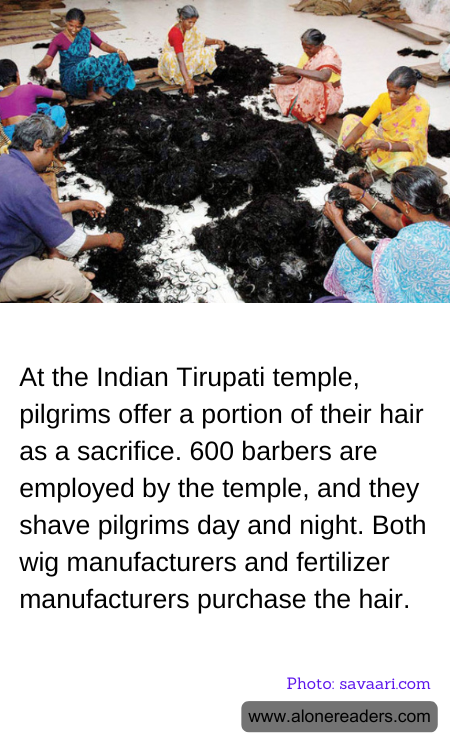
Interestingly, the hair collected from this ritual does not go to waste. In a remarkable example of resourcefulness, the temple has established a thriving business by selling the hair to wig manufacturers and fertilizer companies. The hair, particularly the long, uncut strands, is highly sought after in the global market for wigs and hair extensions. It is meticulously sorted, cleaned, and processed before being shipped to various countries, where it is transformed into high-quality hair products.
Additionally, the shorter hair is used in the production of amino acids, which are essential components in the manufacture of fertilizers. This innovative use of hair not only generates significant revenue for the temple but also contributes to sustainable agricultural practices. The funds raised from these sales are channeled back into the temple's operations, supporting various charitable activities and infrastructure development.
The practice of hair offering at the Tirupati temple is a fascinating blend of spirituality, tradition, and commerce. It highlights the temple's ability to adapt ancient customs to modern economic realities while maintaining the sanctity of the ritual. For the millions who visit Tirupati, the act of tonsuring remains a deeply personal and transformative experience, one that transcends the material value of the hair itself. As pilgrims leave the temple with bare heads and renewed spirits, they carry with them the blessings of Lord Venkateswara and the hope of a brighter future.