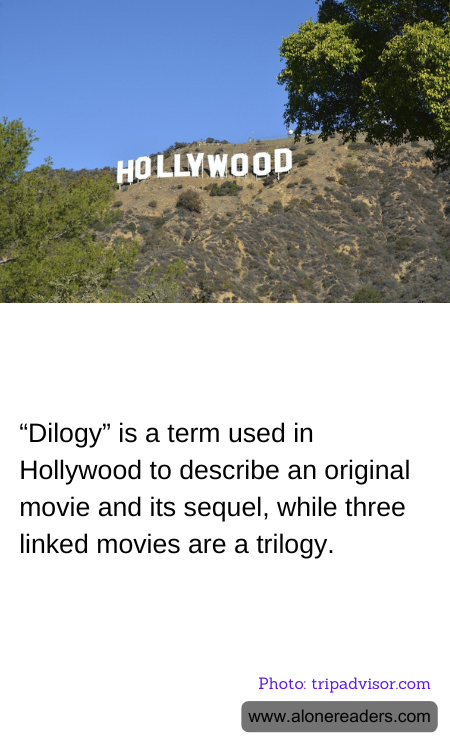
In the world of cinema, storytelling often extends beyond a single film, leading to the creation of sequels and series that captivate audiences over multiple installments. While the term "trilogy" is widely recognized to describe a series of three interconnected films, the concept of a "dilogy" is less commonly discussed but equally significant. A dilogy refers to an original movie and its sequel, forming a two-part narrative that expands on the characters, themes, and plots introduced in the first film.
The use of dilogies in Hollywood allows filmmakers to delve deeper into their stories without the commitment of a full trilogy. This format offers a balanced approach to storytelling, providing enough space to explore new dimensions of the narrative while maintaining the coherence and intensity of the original film. Dilogies can be particularly effective when the story arc naturally concludes after two installments, avoiding the potential pitfalls of stretching a narrative too thin over three or more films.
One of the key advantages of a dilogy is its ability to maintain audience interest without overstaying its welcome. By focusing on two films, creators can ensure that the sequel remains tightly connected to the original, preserving the essence and appeal that drew audiences in the first place. This format also allows for a more concentrated development of characters and themes, offering a satisfying continuation that feels both fresh and familiar.
In contrast, trilogies often require a more complex narrative structure, with each film needing to stand on its own while contributing to a larger story arc. While trilogies can offer a more expansive exploration of a fictional universe, they also carry the risk of diminishing returns if the subsequent films fail to live up to the original. A dilogy, on the other hand, can provide a more focused and cohesive experience, ensuring that the sequel complements and enhances the original film.
Hollywood has seen several successful dilogies that have left a lasting impact on audiences. These two-part narratives often strike a perfect balance between continuation and conclusion, offering a satisfying resolution without the need for further installments. By embracing the dilogy format, filmmakers can craft stories that resonate deeply with viewers, delivering a cinematic experience that is both complete and compelling.
In conclusion, while trilogies have long been a staple of Hollywood storytelling, the concept of a dilogy offers a valuable alternative for filmmakers seeking to expand their narratives. By focusing on two interconnected films, dilogies provide a unique opportunity to explore stories in depth without the constraints of a longer series. As audiences continue to seek engaging and meaningful cinematic experiences, the dilogy remains a powerful tool in the art of storytelling, offering a perfect blend of continuity and closure.
