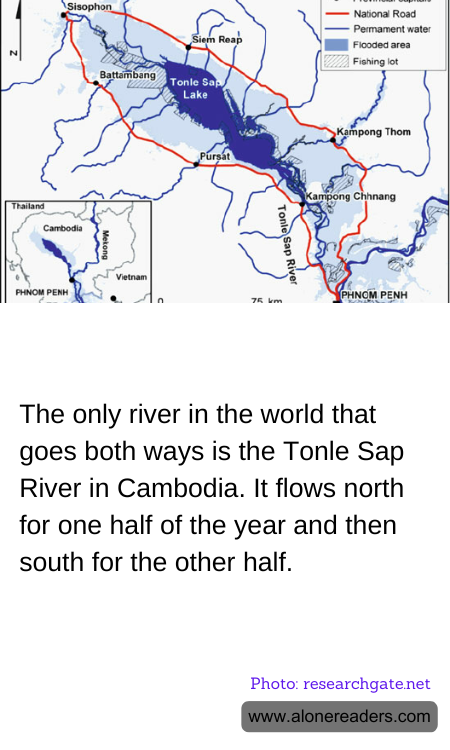
Nestled in the heart of Cambodia, the Tonle Sap River is a natural wonder that defies conventional understanding of river flow. Unlike any other river in the world, the Tonle Sap River uniquely reverses its direction twice a year, a phenomenon that plays a crucial role in the ecological and cultural landscape of the region.
The Tonle Sap River's remarkable behavior is closely tied to the seasonal rhythms of the Mekong River, into which it flows. During the monsoon season, typically from May to October, the Mekong River swells with rainwater, causing its water levels to rise dramatically. This surge in water pressure forces the Tonle Sap River to reverse its flow, pushing water northward into the Tonle Sap Lake, the largest freshwater lake in Southeast Asia. This annual inundation expands the lake's surface area from approximately 2,500 square kilometers to over 15,000 square kilometers, transforming the surrounding floodplains into a rich, fertile habitat teeming with biodiversity.
As the dry season approaches, from November to April, the Mekong River's water levels begin to recede. This reduction in pressure allows the Tonle Sap River to revert to its original southward flow, draining the lake back into the Mekong. This cyclical reversal is not only a fascinating hydrological event but also a vital ecological process that supports a diverse array of wildlife, including numerous fish species, birds, and other aquatic life. The seasonal flooding deposits nutrient-rich silt across the floodplains, creating an ideal environment for agriculture and sustaining the livelihoods of millions of Cambodians who rely on fishing and farming.
The Tonle Sap River's unique flow pattern has also shaped the cultural and economic fabric of the region. The communities living around the lake have adapted to the river's rhythms, developing floating villages and stilted houses that rise and fall with the water levels. The annual water festival, known as Bon Om Touk, celebrates the river's reversal and is a time of great joy and festivity, marked by boat races and traditional ceremonies.
In addition to its ecological and cultural significance, the Tonle Sap River faces challenges from climate change and human activities, such as dam construction and overfishing, which threaten its delicate balance. Efforts are underway to protect this vital waterway and ensure its sustainability for future generations.
The Tonle Sap River stands as a testament to the intricate connections between nature and human life. Its bi-directional flow is a reminder of the dynamic forces at play in our natural world and the importance of preserving such unique ecosystems. As we continue to learn from and celebrate this extraordinary river, it remains a symbol of resilience and adaptability in the face of changing environmental conditions.
