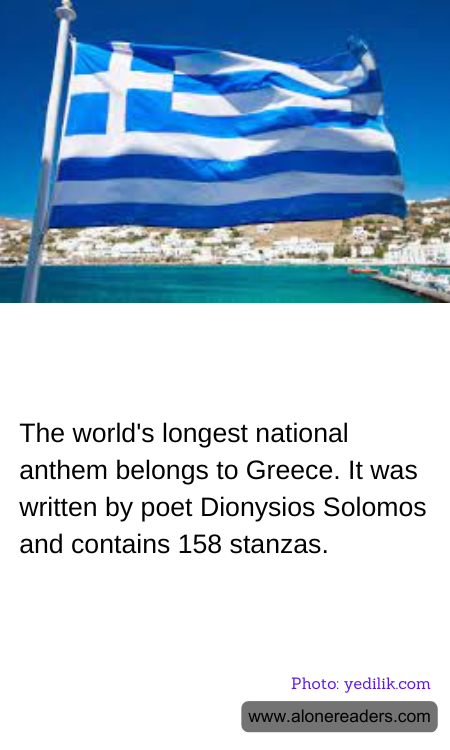
The national anthem of Greece holds a unique distinction in the world of national symbols. Known as "Hymn to Liberty" or "?µ??? e?? t?? ??e??e??a?" in Greek, it is celebrated not only for its stirring melody and patriotic fervor but also for its remarkable length. Composed by the esteemed poet Dionysios Solomos in 1823, this anthem is the longest national anthem in the world, comprising an astonishing 158 stanzas.
Dionysios Solomos, a revered figure in Greek literature, penned the anthem during a period of intense national struggle. The early 19th century was a time when Greece was fighting for independence from the Ottoman Empire, and Solomos's verses captured the spirit of liberation and the yearning for freedom that permeated the Greek consciousness. His work was later set to music by Nikolaos Mantzaros, a composer who ensured that the anthem resonated with the emotional and cultural depth of the Greek people.
While the anthem contains 158 stanzas, only the first two are typically performed at official events and ceremonies. These opening stanzas encapsulate the essence of the Greek fight for independence and the enduring spirit of liberty. The anthem's length is a testament to the depth of feeling and the complexity of the historical context it seeks to convey. Each stanza is a vivid portrayal of the struggles, sacrifices, and ultimate triumphs of the Greek people in their quest for self-determination.
The "Hymn to Liberty" is more than just a national anthem; it is a literary masterpiece that reflects the rich cultural heritage of Greece. Solomos's use of language is both poetic and powerful, drawing on classical Greek themes and imagery to evoke a sense of timelessness and continuity with the past. The anthem serves as a reminder of Greece's ancient history and its enduring legacy as the cradle of Western civilization.
For visitors to Greece, the national anthem offers a window into the soul of the nation. It is a poignant reminder of the resilience and courage that have defined the Greek people throughout their history. Whether heard at a formal state occasion or sung with pride by schoolchildren, the "Hymn to Liberty" continues to inspire and unite Greeks around the world.
In a world where national anthems often serve as brief expressions of identity, Greece's anthem stands out for its depth and breadth. It is a celebration of freedom, a tribute to those who fought for it, and a call to future generations to cherish and uphold the values of liberty and independence. Dionysios Solomos's enduring words and Nikolaos Mantzaros's stirring composition ensure that the "Hymn to Liberty" remains a powerful symbol of Greek pride and patriotism.
