More About This Card
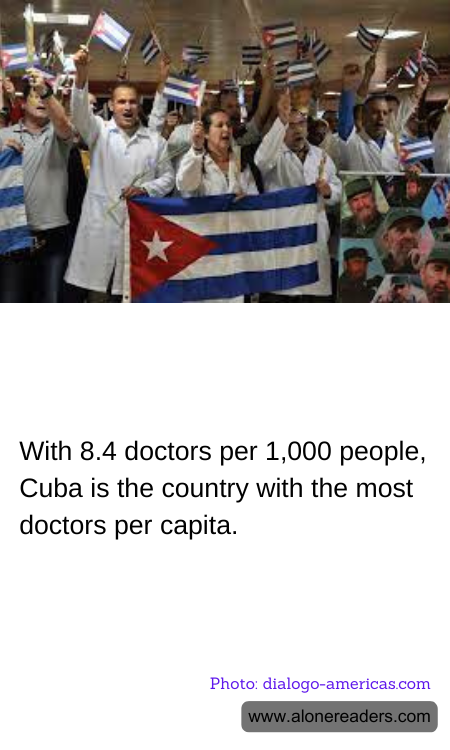
Cuba, a small island nation in the Caribbean, has long been recognized for its robust healthcare system, which stands out globally for its impressive doctor-to-population ratio. With 8.4 doctors per 1,000 people, Cuba boasts the highest number of doctors per capita in the world. This remarkable statistic is a testament to the country's commitment to healthcare and its unique approach to medical education and services.
The roots of Cuba's healthcare success can be traced back to the Cuban Revolution in 1959, which brought about significant social and economic changes. The new government prioritized healthcare as a fundamental human right, leading to the establishment of a comprehensive, state-run healthcare system. This system is characterized by its emphasis on preventive care, community-based services, and universal access, ensuring that every citizen receives medical attention regardless of their economic status.
Cuba's medical education system plays a crucial role in maintaining its high doctor-to-population ratio. The country has invested heavily in training medical professionals, with numerous medical schools and institutions dedicated to producing well-qualified doctors. The Latin American School of Medicine (ELAM) in Havana is one of the largest medical schools in the world, attracting students from across the globe. This focus on education not only supplies Cuba with a steady stream of doctors but also allows the country to export medical expertise to other nations in need.
Cuban doctors are renowned for their dedication and skill, often working in challenging conditions both at home and abroad. The country has a long history of sending medical brigades to assist in international crises, from natural disasters to disease outbreaks. This practice not only showcases Cuba's solidarity with other nations but also provides its doctors with invaluable experience in diverse healthcare settings.
Despite its achievements, Cuba's healthcare system faces challenges, particularly due to economic constraints and the ongoing U.S. embargo. These factors have led to shortages of medical supplies and equipment, which can impact the quality of care. However, the resilience and resourcefulness of Cuban healthcare professionals often mitigate these challenges, ensuring that the population continues to receive effective medical services.
Cuba's healthcare model, with its high doctor-to-population ratio, offers valuable lessons for other countries striving to improve their healthcare systems. It demonstrates the importance of prioritizing medical education, preventive care, and universal access to healthcare services. While not without its challenges, Cuba's approach underscores the potential of a healthcare system that places people at its core, ensuring that medical care is a right rather than a privilege.