More About This Card
Paraguay, a landlocked nation nestled in the heart of South America, presents a fascinating anomaly in the world of naval forces. Despite having no coastline, Paraguay boasts the largest navy among landlocked countries, a testament to its unique historical and geographical circumstances. This intriguing aspect of Paraguay's military might not only highlights the country's strategic priorities but also underscores the diverse roles that navies can play beyond traditional maritime boundaries.
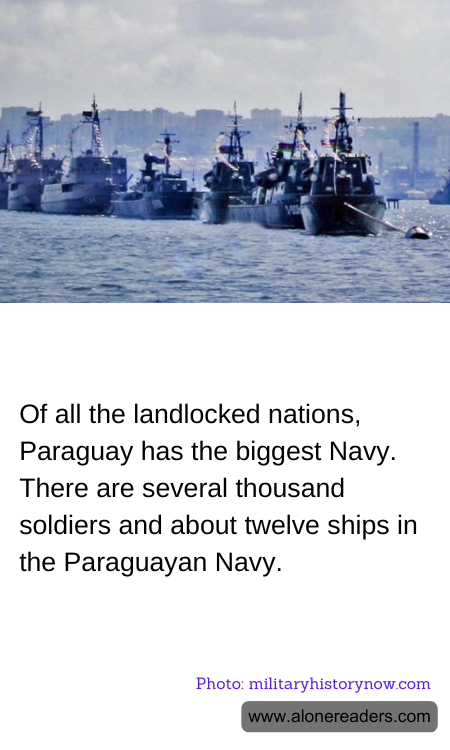
The Paraguayan Navy, with several thousand soldiers and approximately twelve ships, operates primarily on the country's extensive river systems, including the Paraguay and Paraná rivers. These waterways are vital arteries for commerce and transportation, linking Paraguay to the Atlantic Ocean via Argentina. The navy's presence on these rivers is crucial for maintaining the security and sovereignty of the nation, ensuring safe passage for goods and people, and protecting the country's interests.
Historically, Paraguay's naval tradition dates back to the 19th century, a period marked by regional conflicts and the need for robust defense mechanisms. The War of the Triple Alliance (1864-1870), in which Paraguay faced Brazil, Argentina, and Uruguay, underscored the importance of controlling riverine routes. This conflict, one of the bloodiest in South American history, left a lasting impact on Paraguay's military strategy, emphasizing the need for a strong naval presence despite the absence of a coastline.
In contemporary times, the Paraguayan Navy continues to play a vital role in national defense and regional cooperation. Its responsibilities extend beyond traditional military functions to include disaster relief, environmental protection, and anti-smuggling operations. The navy's ability to adapt to these diverse roles demonstrates its importance in maintaining stability and security within the region.
Moreover, the Paraguayan Navy's existence challenges conventional perceptions of naval power. It highlights how nations can leverage their geographical features to develop effective defense strategies tailored to their specific needs. For Paraguay, the rivers are not just natural resources but strategic assets that require protection and management.
The presence of a significant naval force in a landlocked country like Paraguay also serves as a reminder of the interconnectedness of global trade and security. As international commerce increasingly relies on inland waterways, the role of riverine navies becomes ever more critical. Paraguay's navy, therefore, is not just a national asset but a participant in broader regional and global security frameworks.
In conclusion, Paraguay's navy stands as a unique example of how a landlocked nation can harness its natural resources to build a formidable naval force. Its existence underscores the strategic importance of riverine routes and the diverse roles that navies can play in ensuring national and regional security. As the world continues to evolve, Paraguay's navy remains a testament to the adaptability and resilience of military forces in the face of geographical constraints.