More About This Card
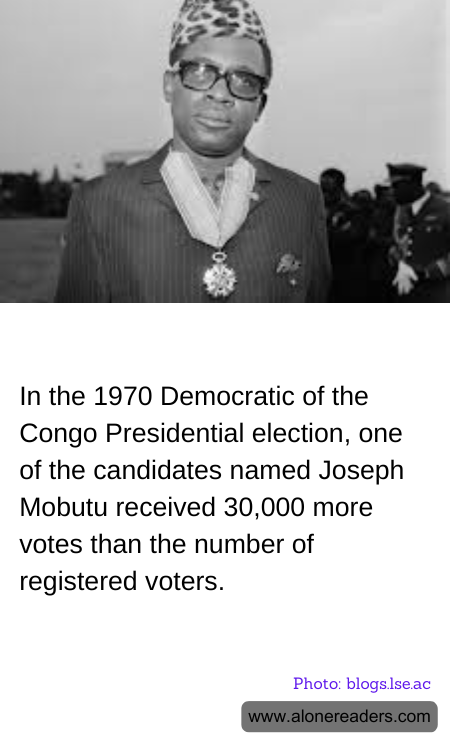
In the annals of political history, the 1970 presidential election in the Democratic Republic of the Congo stands out as a particularly striking example of electoral irregularities. During this election, Joseph Mobutu, who had seized power in a coup five years earlier, was a candidate. The election results were controversial, with Mobutu reportedly receiving 30,000 more votes than the total number of registered voters. This discrepancy highlighted the challenges of maintaining democratic integrity in a nation grappling with political instability and the aftermath of colonial rule.
The Democratic Republic of the Congo, known as Zaire from 1971 to 1997, was navigating a complex political landscape in the years following its independence from Belgium in 1960. The country was rife with internal conflicts and power struggles, which set the stage for Mobutu's rise to power. By 1970, Mobutu had established himself as the head of state, and the presidential election was seen as an opportunity to legitimize his rule. However, the election process was marred by allegations of fraud and manipulation, casting a long shadow over the democratic aspirations of the Congolese people.
The reported discrepancy in the number of votes cast for Mobutu compared to the number of registered voters was a glaring indication of electoral malpractice. Such irregularities were not uncommon in the political climate of the time, where authoritarian regimes often manipulated electoral processes to maintain control. The 1970 election served as a poignant reminder of the challenges faced by emerging democracies in ensuring free and fair elections. It underscored the importance of transparency, accountability, and the establishment of robust electoral systems to safeguard the democratic process.
Despite the controversy surrounding the election, Mobutu continued to consolidate his power, ruling the country for nearly three decades. His regime was characterized by widespread corruption, human rights abuses, and economic mismanagement, which left a lasting impact on the nation. The 1970 election and its irregularities were emblematic of the broader issues that plagued Mobutu's rule and contributed to the eventual decline of his government.
Reflecting on the 1970 election offers valuable lessons for contemporary societies striving to uphold democratic principles. It highlights the critical need for vigilance in protecting electoral integrity and the role of international observers and civil society in holding governments accountable. As nations around the world continue to grapple with the complexities of democratic governance, the story of the 1970 Democratic Republic of the Congo presidential election serves as a cautionary tale of the perils of unchecked power and the enduring quest for genuine democracy.