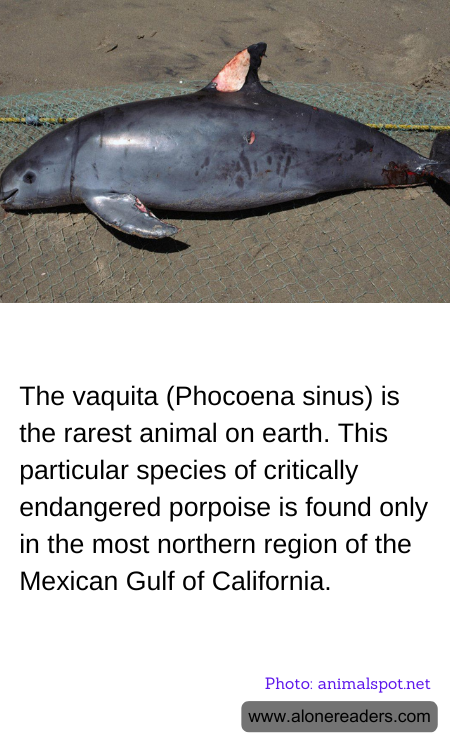
The vaquita, scientifically known as Phocoena sinus, holds the unfortunate title of being the rarest animal on Earth. This elusive species of porpoise is found exclusively in the northernmost reaches of the Gulf of California, Mexico. Despite its critical status, the vaquita remains relatively unknown to the general public, overshadowed by more famous endangered species. However, its plight is no less urgent, as conservationists race against time to prevent its extinction.
The vaquita is a small marine mammal, measuring about four to five feet in length and weighing up to 120 pounds. It is easily recognizable by its distinctive facial markings, which include dark rings around its eyes and lips, giving it a unique, panda-like appearance. Vaquitas are shy creatures, rarely seen by humans, and they tend to avoid boats and other disturbances in their natural habitat. This elusive nature has made it challenging for researchers to study them and gather accurate population data.
The primary threat to the vaquita's survival is bycatch, which occurs when these porpoises are accidentally caught in gillnets used for illegal fishing of the totoaba fish. The swim bladders of the totoaba are highly valued in traditional Chinese medicine, leading to a lucrative black market trade. Despite efforts by the Mexican government to ban gillnets and enforce stricter fishing regulations, illegal fishing activities continue to pose a significant risk to the vaquita population.
Conservationists and environmental organizations have been working tirelessly to save the vaquita from extinction. Initiatives include increased patrolling of the vaquita's habitat, the development of alternative fishing gear that is less harmful to marine life, and international collaborations to reduce the demand for totoaba swim bladders. Public awareness campaigns are also crucial, as they aim to educate people about the vaquita's plight and encourage support for conservation efforts.
The situation is dire, with estimates suggesting that fewer than ten vaquitas remain in the wild. This critically low number underscores the urgent need for immediate and effective action. The vaquita's survival depends on a concerted global effort to eliminate the threats it faces and to protect its natural habitat. While the challenges are immense, the story of the vaquita serves as a poignant reminder of the impact human activities can have on the natural world and the responsibility we bear to preserve it.
In conclusion, the vaquita's struggle for survival is a call to action for conservationists, governments, and individuals worldwide. By working together to address the threats facing this rare porpoise, there is hope that the vaquita can be saved from the brink of extinction. It is a race against time, but with determination and collaboration, the vaquita may yet have a chance to thrive once more in the waters of the Gulf of California.
