More About This Card
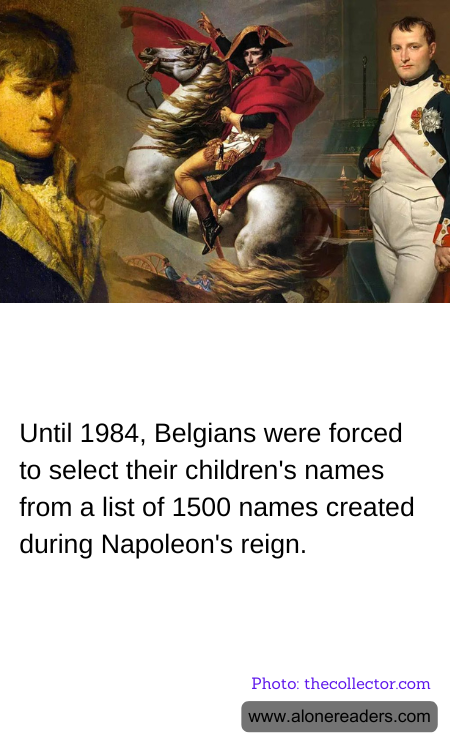
For many years, the naming of children in Belgium was not just a matter of personal choice or family tradition but was instead dictated by a list of approved names. This list, which contained 1,500 names, was established during the reign of Napoleon Bonaparte and remained in effect until 1984. The origins of this list can be traced back to the Napoleonic Code, which aimed to standardize various aspects of life across the territories under French control, including Belgium.
Napoleon's influence on Belgium was profound, and the naming convention was part of a broader effort to impose order and uniformity. The list was designed to ensure that names were easily recognizable and could be recorded accurately in official documents. This was particularly important for administrative purposes, such as maintaining civil records and conducting censuses. The names included were predominantly French, reflecting the cultural and political dominance of France during that era.
For Belgian parents, this meant that their choices were significantly restricted. The list included traditional names that were deemed appropriate and respectable, leaving little room for creativity or cultural diversity. As a result, many Belgian families found themselves selecting names that had been passed down through generations, often with little personal significance or connection to their heritage.
The rigidity of this system began to loosen in the latter half of the 20th century, as societal attitudes towards personal freedom and cultural expression evolved. By 1984, the Belgian government recognized the need for change and abolished the mandatory list, allowing parents the freedom to choose names for their children without restriction. This shift was part of a broader movement towards greater individual rights and cultural recognition within the country.
The lifting of these restrictions marked a significant moment in Belgian history, as it allowed for a greater expression of cultural identity and personal choice. Parents could now select names that reflected their linguistic, regional, or familial backgrounds, contributing to a richer tapestry of Belgian identity. This change also aligned with the growing multiculturalism in Belgium, as the country became home to a more diverse population.
Today, Belgian parents enjoy the freedom to choose names that hold personal meaning, whether they are inspired by family traditions, cultural heritage, or modern trends. The legacy of the Napoleonic naming list, however, remains a fascinating chapter in Belgium's history, illustrating how deeply historical events can influence personal aspects of life, such as the naming of a child. The evolution from a rigid list to a more open and inclusive approach reflects the broader changes in Belgian society, highlighting the importance of personal freedom and cultural diversity in shaping national identity.