More About This Card
In the intricate tapestry of nature, the botfly stands out as a peculiar and fascinating creature, known for its unique reproductive strategy that involves an unsuspecting intermediary: the mosquito. This parasitic relationship is a testament to the complex interactions that can occur in the animal kingdom, showcasing both the ingenuity and the sometimes unsettling aspects of nature.
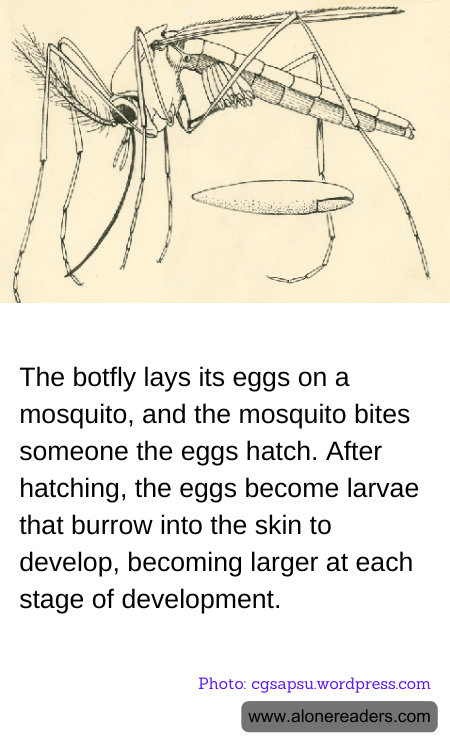
The life cycle of the botfly begins with the adult female botfly laying her eggs on a mosquito, which serves as an unwitting carrier. This process is a remarkable example of biological adaptation, as the botfly has evolved to exploit the mosquito's ability to access warm-blooded hosts. Once the mosquito lands on a human or other mammal to feed, the warmth of the host's skin triggers the hatching of the botfly eggs. This is where the botfly's life cycle takes a turn that many might find unsettling.
Upon hatching, the tiny larvae, often referred to as maggots, begin their journey by burrowing into the skin of the host. This process is typically painless at first, as the larvae are small and the entry point is usually no larger than a mosquito bite. However, as the larvae grow, they create a small, raised bump on the skin, which can become itchy or uncomfortable. This bump is the larvae's temporary home, where they feed on the host's tissue and continue to develop.
The botfly larvae undergo several stages of growth beneath the skin, becoming larger with each stage. This development can take several weeks, during which the larvae are relatively safe from external threats, protected by the host's skin. While this might sound alarming, it's important to note that botfly infestations, though unpleasant, are generally not dangerous and can be treated effectively.
Eventually, the larvae reach maturity and are ready to exit their host. They do so by creating a small hole in the skin, through which they emerge and drop to the ground. Once free, the larvae burrow into the soil to pupate, eventually transforming into adult botflies, thus completing their life cycle.
While the botfly's reproductive strategy may seem invasive, it is a natural part of the ecosystem. It highlights the incredible adaptability of life forms and the intricate relationships that exist between different species. For those who find themselves hosting these uninvited guests, medical treatment is straightforward, typically involving the removal of the larvae and care for the affected skin.
Understanding the botfly's life cycle not only sheds light on the complexities of nature but also reminds us of the delicate balance that exists within ecosystems. It is a fascinating example of how life finds a way to thrive, even in the most unexpected and ingenious of manners.