More About This Card
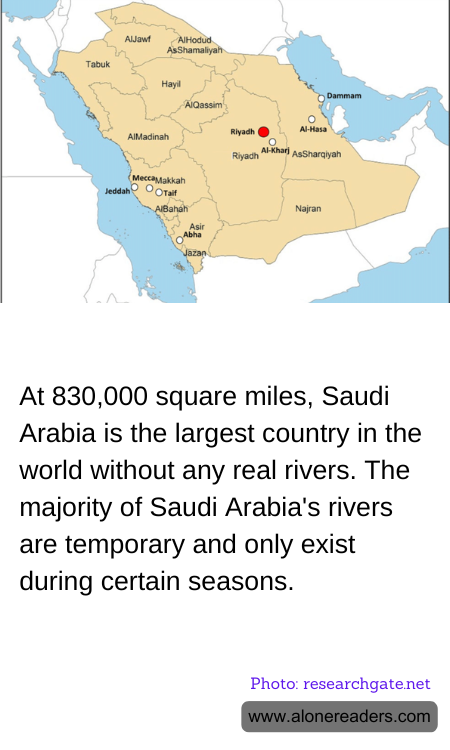
Saudi Arabia, a nation renowned for its vast deserts and rich cultural heritage, holds the unique distinction of being the largest country in the world without any permanent rivers. Spanning approximately 830,000 square miles, this expansive land is characterized by its arid climate and striking landscapes, which include the Rub' al Khali, or the Empty Quarter, the largest continuous sand desert in the world.
The absence of perennial rivers in Saudi Arabia is a fascinating aspect of its geography. Unlike many countries where rivers are a constant presence, providing water for agriculture, transportation, and daily life, Saudi Arabia's rivers are largely ephemeral. These temporary waterways, known as wadis, only flow during certain seasons, primarily after rare and sporadic rainfall. When the rains do come, they can transform the dry riverbeds into rushing torrents, albeit briefly, before the water quickly evaporates or seeps into the ground.
This lack of permanent rivers has significantly influenced the way of life in Saudi Arabia. Historically, the scarcity of water has shaped settlement patterns, with communities traditionally forming around oases and other reliable water sources. The Bedouin, the nomadic tribes of the Arabian Peninsula, have long adapted to this environment, developing a deep understanding of the desert and its rhythms. Their traditional knowledge of finding and conserving water is a testament to human resilience in the face of harsh natural conditions.
In modern times, Saudi Arabia has turned to innovative solutions to address its water needs. The country has invested heavily in desalination technology, becoming one of the world's largest producers of desalinated water. This process, which removes salt and impurities from seawater, provides a crucial supply of fresh water for the population and supports the nation's agricultural sector. Additionally, Saudi Arabia has implemented advanced water management strategies, including the construction of dams and the development of underground water reservoirs, to ensure a stable water supply.
Despite these advancements, the challenge of water scarcity remains a pressing issue for Saudi Arabia. The government continues to explore new technologies and strategies to enhance water conservation and sustainability. Public awareness campaigns and educational programs are also in place to encourage responsible water use among citizens.
Saudi Arabia's unique geographical and environmental conditions offer a compelling study of adaptation and innovation. The country's ability to thrive without permanent rivers underscores the importance of resourcefulness and technological advancement in overcoming natural limitations. As the world faces increasing water scarcity challenges, Saudi Arabia's experiences and solutions may provide valuable insights for other nations navigating similar issues.