More About This Card
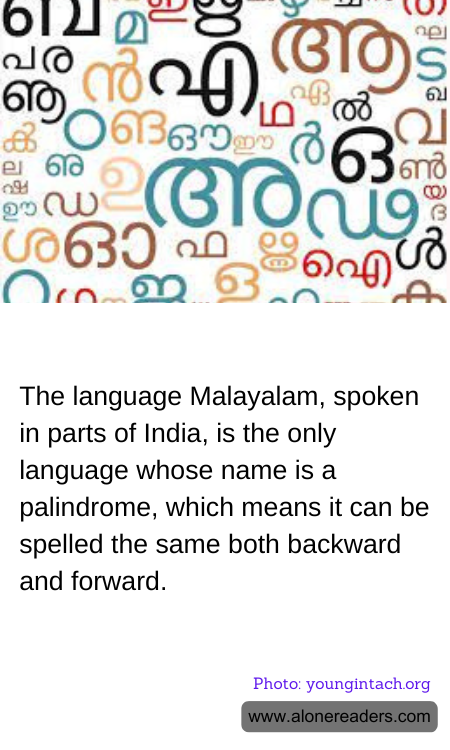
Malayalam, a language spoken predominantly in the Indian state of Kerala and the union territories of Lakshadweep and Puducherry, holds a unique distinction in the world of linguistics. It is the only language whose name is a palindrome, meaning it reads the same backward as forward. This fascinating characteristic not only adds to the charm of the language but also sparks curiosity among linguists and language enthusiasts worldwide.
The word "Malayalam" itself is a testament to the rich cultural and historical tapestry of the region it represents. The language is part of the Dravidian family, which includes other South Indian languages such as Tamil, Telugu, and Kannada. It is spoken by over 35 million people, making it one of the 22 scheduled languages of India. The script used for Malayalam is derived from the ancient Brahmi script and has evolved over centuries, resulting in a script that is both visually appealing and complex.
Malayalam's palindromic nature is more than just a linguistic curiosity; it reflects the symmetry and balance found in the culture of Kerala. Known for its lush landscapes, vibrant festivals, and rich traditions, Kerala is often referred to as "God's Own Country." The language plays a crucial role in preserving and promoting the state's cultural heritage. It is the medium through which classical art forms like Kathakali and Mohiniyattam are performed, and it is the language of a rich literary tradition that includes poetry, novels, and philosophical texts.
The uniqueness of Malayalam extends beyond its name. The language is known for its extensive vocabulary and intricate grammar, which can pose challenges for learners but also offer a rewarding experience for those who delve into its depths. Malayalam literature has produced many renowned writers and poets, such as Thunchaththu Ezhuthachan, Kumaran Asan, and Vaikom Muhammad Basheer, whose works have contributed significantly to Indian literature.
In today's globalized world, Malayalam continues to thrive, adapting to modern influences while retaining its traditional roots. The language has a strong presence in digital media, with numerous websites, blogs, and social media platforms dedicated to promoting Malayalam content. This digital presence ensures that the language remains relevant and accessible to younger generations, both in India and among the global Malayali diaspora.
The palindromic nature of the word "Malayalam" serves as a delightful entry point into exploring the language's rich history and cultural significance. It is a reminder of the beauty and complexity inherent in human languages and the diverse ways in which they reflect the identities and stories of the people who speak them. As Malayalam continues to evolve and flourish, it remains a symbol of the enduring legacy of Kerala's cultural heritage.