More About This Card
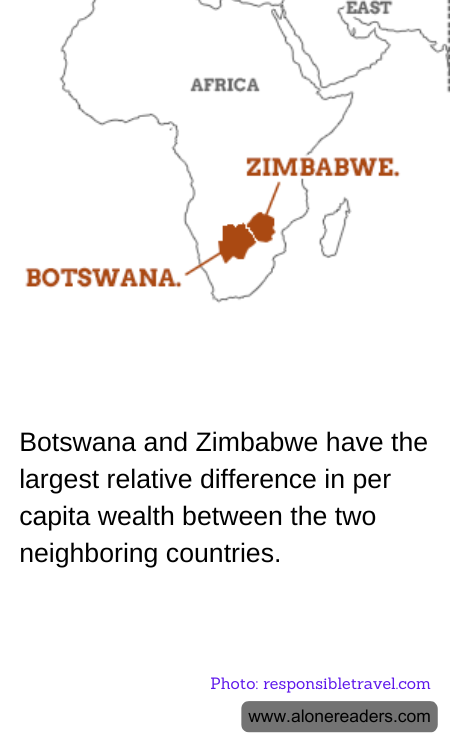
Botswana and Zimbabwe, two neighboring countries in Southern Africa, present a fascinating case study in economic divergence. Despite sharing a border, these nations have experienced vastly different economic trajectories, resulting in one of the largest relative differences in per capita wealth between neighboring countries globally. This disparity is rooted in a combination of historical, political, and economic factors that have shaped the fortunes of each nation.
Botswana, often hailed as one of Africa's success stories, has enjoyed remarkable economic growth since gaining independence from Britain in 1966. The discovery of diamonds in the late 1960s transformed Botswana's economy, providing a steady stream of revenue that has been prudently managed by the government. The country's commitment to good governance, sound economic policies, and investment in education and infrastructure has fostered a stable environment conducive to growth. As a result, Botswana boasts one of the highest per capita incomes in Africa, with a thriving middle class and a relatively high standard of living.
In stark contrast, Zimbabwe's economic journey has been fraught with challenges. Once considered the breadbasket of Africa, Zimbabwe's economy began to unravel in the late 20th century due to a series of political and economic missteps. Land reform policies, hyperinflation, and international sanctions have severely hampered economic growth. The country's reliance on agriculture, coupled with political instability, has led to a significant decline in per capita wealth. Today, Zimbabwe faces high unemployment rates, widespread poverty, and a struggling economy, which starkly contrasts with its neighbor's prosperity.
The disparity in per capita wealth between Botswana and Zimbabwe is not merely a reflection of natural resource endowments but also highlights the critical role of governance and policy choices. Botswana's success underscores the importance of transparent governance, effective resource management, and strategic investments in human capital. Conversely, Zimbabwe's experience serves as a cautionary tale of how political instability and poor economic management can erode wealth and hinder development.
Efforts to bridge the economic gap between these two nations are ongoing, with regional cooperation and international support playing crucial roles. Initiatives aimed at fostering trade, investment, and infrastructure development could help stimulate economic growth in Zimbabwe, potentially narrowing the wealth gap over time. Additionally, political reforms and a renewed focus on sustainable development could pave the way for a more prosperous future for Zimbabwe.
In conclusion, the economic divergence between Botswana and Zimbabwe offers valuable lessons in the importance of governance, policy, and strategic resource management. While Botswana continues to thrive, Zimbabwe faces the challenge of rebuilding its economy and improving the livelihoods of its citizens. The journey towards economic parity between these neighboring countries may be long, but with concerted efforts and strategic planning, it is a goal that remains within reach.