More About This Card
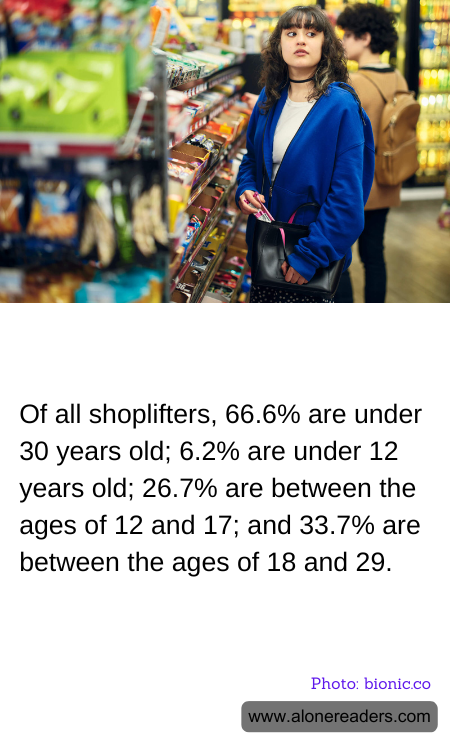
Shoplifting is a pervasive issue that affects retailers worldwide, and understanding the demographics of those who engage in this activity can provide valuable insights for prevention and intervention strategies. Recent statistics reveal that a significant portion of shoplifters are young individuals, with 66.6% being under the age of 30. This data highlights the need for targeted approaches to address the underlying causes of shoplifting among different age groups.
A closer examination of the age distribution among shoplifters shows that 6.2% are under 12 years old. This statistic is particularly concerning as it suggests that even very young children are engaging in theft. The reasons behind this behavior can vary, ranging from peer pressure and a lack of understanding of the consequences to imitating adult behavior. It is crucial for parents, educators, and community leaders to engage in open dialogues with children about the importance of honesty and the repercussions of stealing. Early intervention programs can play a vital role in educating young children and steering them away from such activities.
The age group of 12 to 17 years old accounts for 26.7% of shoplifters. Adolescence is a time of exploration and identity formation, and some teenagers may shoplift as a form of rebellion or to fit in with peers. Others might do it for the thrill or due to economic pressures. Schools and community organizations can help mitigate these factors by providing supportive environments where teenagers can discuss their challenges and learn about the consequences of illegal activities. Mentorship programs and extracurricular activities can also offer positive outlets for teenagers, reducing the likelihood of them turning to shoplifting.
The largest segment of young shoplifters, 33.7%, falls within the 18 to 29 age range. This group often faces unique challenges, such as financial instability, unemployment, or the pressures of establishing independence. For some, shoplifting may be a desperate measure to cope with these difficulties. Addressing the root causes of shoplifting in this age group requires a multifaceted approach, including access to job training programs, financial literacy education, and mental health resources. Retailers can also play a role by implementing security measures that deter theft while offering support to those caught shoplifting, such as referral to counseling services.
Understanding the demographics of shoplifters is essential for developing effective prevention strategies. By focusing on the specific needs and challenges of each age group, communities can work towards reducing the incidence of shoplifting and its impact on society. Through education, support, and targeted interventions, it is possible to address the factors that lead young people to engage in theft and help them make more positive choices for their futures.