More About This Card
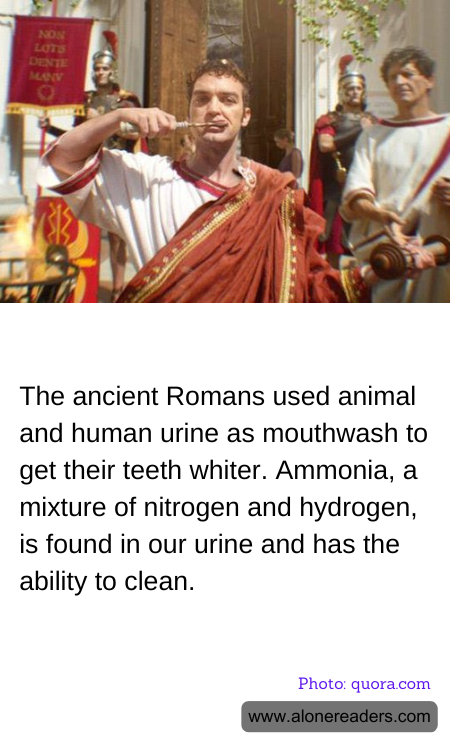
In the annals of history, the ancient Romans are often celebrated for their architectural marvels, philosophical contributions, and military prowess. However, their daily life practices also offer a fascinating glimpse into their ingenuity and resourcefulness, particularly in the realm of personal hygiene. One of the more curious aspects of Roman hygiene was their use of urine as a mouthwash to whiten teeth. This practice, while seemingly bizarre by modern standards, was rooted in the chemical properties of urine, specifically its ammonia content.
Urine, both human and animal, was a readily available resource in ancient Rome. It was collected in public urinals and even in private homes, then repurposed for various cleaning tasks. The key component that made urine effective as a mouthwash was ammonia, a compound formed from nitrogen and hydrogen. Ammonia is known for its potent cleaning properties and is still used today in many household cleaning products. In the context of dental hygiene, ammonia acts as a bleaching agent, helping to remove stains and whiten teeth.
The Romans were not alone in their use of urine for cleaning purposes. Historical records indicate that other ancient civilizations also recognized the utility of urine in various cleaning applications. However, the Romans were particularly systematic in their approach, establishing a network of fullonicae, or laundries, where urine was used to clean and whiten textiles. This same principle was applied to dental care, where the ammonia in urine helped to break down organic matter and brighten the teeth.
While the idea of using urine as a mouthwash may seem unappealing today, it is important to view this practice through the lens of the time. The Romans lacked the modern dental products and technologies that we take for granted, and their innovative use of natural resources was a testament to their practical approach to problem-solving. Moreover, the practice underscores a broader theme in Roman culture: the willingness to embrace unconventional methods to achieve desired results.
In contemporary society, we benefit from a wide array of dental care products that are both effective and pleasant to use. However, the Roman practice of using urine as a mouthwash serves as a reminder of the lengths to which humans have gone throughout history to maintain personal hygiene and appearance. It also highlights the enduring quest for a bright, healthy smile—a pursuit that transcends time and culture.
In conclusion, while the ancient Roman use of urine as a mouthwash may raise eyebrows today, it was a logical solution given the resources and knowledge available at the time. This practice not only reflects the Romans' innovative spirit but also provides an intriguing insight into the evolution of dental care practices throughout history.