More About This Card
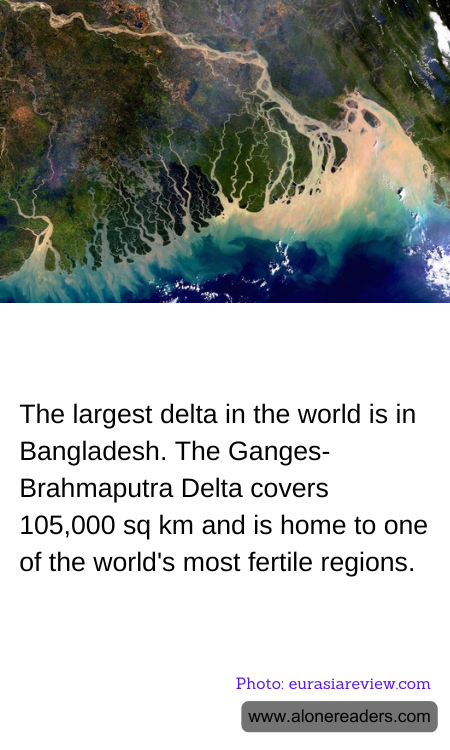
The Ganges-Brahmaputra Delta, often referred to as the Sundarbans Delta, is the largest delta in the world, sprawling across an impressive 105,000 square kilometers. Nestled primarily in Bangladesh, with a portion extending into the Indian state of West Bengal, this delta is a geographical marvel and a vital ecological region. Its vast expanse is formed by the confluence of two of Asia's mightiest rivers, the Ganges and the Brahmaputra, which together with the Meghna River, deposit rich alluvial soil that has created one of the most fertile regions on the planet.
This delta is not only a testament to the power of natural forces but also a cradle of biodiversity. It is home to the Sundarbans, the largest mangrove forest in the world, which is a UNESCO World Heritage site. The Sundarbans is renowned for its unique ecosystem, which supports a diverse range of flora and fauna, including the iconic Bengal tiger, estuarine crocodiles, and a variety of bird species. The intricate network of tidal waterways, mudflats, and small islands within the delta provides a critical habitat for these species, many of which are endangered.
The fertility of the Ganges-Brahmaputra Delta has made it one of the most densely populated regions in the world. The rich soil and abundant water supply support extensive agriculture, which is the backbone of the local economy. Rice, jute, and a variety of fruits and vegetables are cultivated here, sustaining millions of people. The delta's agricultural productivity is crucial not only for Bangladesh but also for global food security, as it contributes significantly to the country's food supply and exports.
However, the delta faces numerous challenges. Climate change poses a significant threat, with rising sea levels and increased frequency of cyclones endangering both human and wildlife populations. The delicate balance of this ecosystem is also threatened by human activities such as deforestation, pollution, and unsustainable fishing practices. Efforts are underway to address these issues through conservation initiatives and sustainable development projects, aiming to preserve the delta's unique environment while supporting the livelihoods of its inhabitants.
The Ganges-Brahmaputra Delta is a region of remarkable natural beauty and ecological importance. Its vast landscapes and rich biodiversity make it a vital area for conservation, while its fertile lands continue to sustain millions of people. As the world grapples with environmental challenges, the delta stands as a reminder of the intricate connections between nature and human life, highlighting the need for sustainable practices to ensure its preservation for future generations.