More About This Card
In the vast tapestry of nature's wonders, few creatures captivate the imagination quite like the Picasso moth, scientifically known as Baorisa hieroglyphica. This extraordinary moth, often hailed as one of the most interesting in the world, is a rare gem found predominantly in the lush landscapes of India and other parts of Asia. Its allure lies not only in its rarity but also in its striking appearance, which has earned it a place among the most visually stunning insects on the planet.
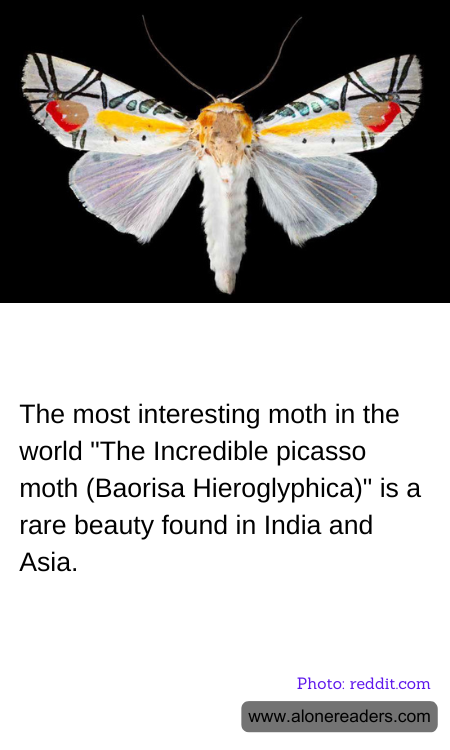
The Picasso moth is a testament to nature's artistry, boasting a vibrant palette of colors and intricate patterns that resemble the abstract works of its namesake, Pablo Picasso. Its wings are adorned with a mesmerizing array of hues, including shades of orange, yellow, and black, interspersed with delicate white markings. This unique combination creates a visual spectacle that is both captivating and enigmatic, drawing the attention of entomologists and nature enthusiasts alike.
Despite its breathtaking beauty, the Picasso moth remains an elusive creature, often hidden within the dense foliage of its natural habitat. Its rarity adds to its mystique, making sightings a cherished experience for those fortunate enough to encounter it. The moth's preference for the subtropical and tropical climates of India and Asia means that it thrives in regions rich in biodiversity, where it plays a vital role in the ecosystem as a pollinator.
The lifecycle of the Picasso moth is as fascinating as its appearance. Like many moths, it undergoes a complete metamorphosis, transitioning from egg to larva, then to pupa, and finally emerging as an adult moth. Each stage of its development is a marvel in itself, reflecting the intricate processes that govern the natural world. The adult moths are primarily nocturnal, adding an element of mystery to their existence as they flutter through the night, their wings catching the moonlight in a dance of color and light.
Conservation efforts are crucial to preserving the Picasso moth and its habitat. As with many species, habitat loss and environmental changes pose significant threats to its survival. Protecting the delicate ecosystems where these moths reside ensures that future generations can continue to marvel at their beauty and the ecological roles they fulfill.
The Picasso moth serves as a reminder of the incredible diversity and splendor of the natural world. Its presence in the forests of India and Asia is a testament to the intricate balance of life on Earth, where even the smallest creatures contribute to the grandeur of the ecosystem. For those who seek to explore the wonders of nature, the Picasso moth stands as a symbol of the beauty and mystery that await discovery.