More About This Card
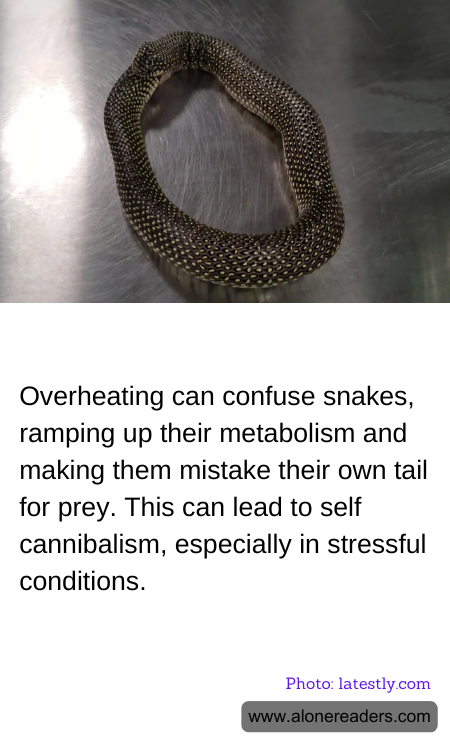
In the intricate world of reptiles, snakes are often admired for their unique adaptations and behaviors. However, one of the more perplexing phenomena observed in these creatures is the occurrence of self-cannibalism, where a snake may mistakenly consume its own tail. This behavior, while rare, is often attributed to the effects of overheating, which can significantly alter a snake's metabolism and perception.
Snakes are ectothermic animals, meaning they rely on external sources of heat to regulate their body temperature. In their natural habitats, they bask in the sun to warm up and seek shade or burrow into the ground to cool down. However, when a snake is exposed to excessive heat, its body can become overstimulated. This overheating can lead to a rapid increase in metabolic rate, causing confusion and disorientation. In such a state, a snake may mistake its own tail for prey, leading to the bizarre and unfortunate act of self-cannibalism.
The confusion induced by overheating is compounded by the stress that snakes may experience in certain environments. Stressful conditions, such as captivity, lack of proper habitat, or sudden changes in their surroundings, can exacerbate the effects of overheating. In captivity, for instance, if a snake's enclosure is not properly regulated, the artificial heat sources can lead to temperatures that are too high for the snake's comfort. Without the ability to escape to a cooler area, the snake's stress levels can rise, further impairing its judgment and increasing the likelihood of self-destructive behavior.
Understanding the underlying causes of this phenomenon is crucial for snake owners and wildlife enthusiasts alike. Proper care and habitat management are essential to prevent overheating and stress in snakes. This includes providing a temperature gradient within enclosures, allowing snakes to regulate their body temperature naturally. Additionally, ensuring that snakes have access to hiding spots and a varied environment can help reduce stress and promote overall well-being.
While self-cannibalism in snakes is a rare and extreme response to environmental stressors, it serves as a reminder of the delicate balance required to maintain the health and safety of these fascinating creatures. By recognizing the signs of overheating and stress, and by taking proactive measures to create a suitable environment, we can help prevent such occurrences and ensure that snakes thrive both in captivity and in the wild.