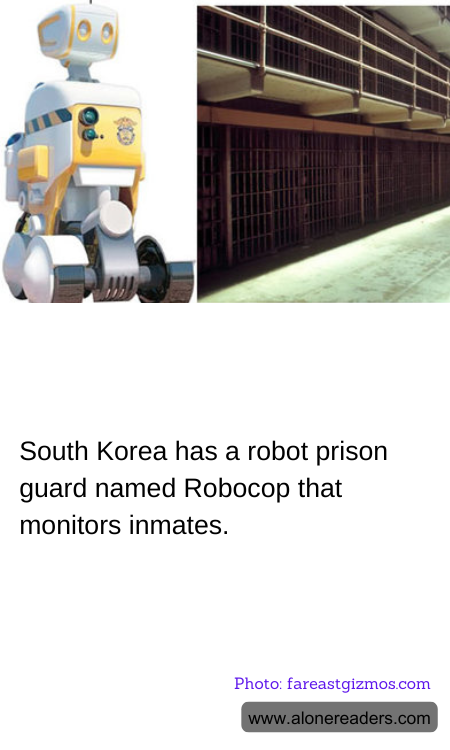
In an era where technology is rapidly transforming various sectors, South Korea has taken a significant step forward by introducing a robot prison guard named Robocop. This innovative approach to prison management is part of a broader effort to enhance security, improve efficiency, and ensure the safety of both inmates and staff within correctional facilities.
Robocop, a product of cutting-edge robotics and artificial intelligence, is designed to monitor inmates and assist human guards in maintaining order. The robot is equipped with an array of sensors and cameras, allowing it to navigate the prison environment autonomously. It can detect unusual behavior, such as fights or attempts to escape, and immediately alert human guards to intervene. This proactive approach not only helps in preventing incidents but also reduces the workload on human staff, allowing them to focus on more complex tasks that require human judgment and empathy.
One of the key features of Robocop is its ability to interact with inmates in a non-confrontational manner. The robot can communicate with prisoners, providing them with information or instructions, and even offering a calming presence in tense situations. This aspect of Robocop’s design is crucial, as it helps to de-escalate potential conflicts without the need for physical intervention. By acting as a neutral entity, Robocop can foster a more peaceful environment within the prison, contributing to the overall well-being of inmates.
The introduction of Robocop also highlights South Korea's commitment to integrating technology into public services. By leveraging robotics, the country aims to address challenges such as staff shortages and the increasing demand for enhanced security measures. The use of robots in prisons is still in its early stages, but the potential benefits are significant. Not only does it promise to improve safety and efficiency, but it also opens up new possibilities for the future of corrections management.
However, the deployment of robotic prison guards does raise some ethical and practical questions. Concerns about privacy, the potential for technical malfunctions, and the impact on employment for human guards are all issues that need to be carefully considered. South Korea is addressing these challenges by ensuring that Robocop operates under strict guidelines and is used to complement, rather than replace, human staff.
As the world watches South Korea's experiment with Robocop, it is clear that the integration of robotics into the prison system could herald a new era in corrections management. By combining technology with human oversight, South Korea is paving the way for a more secure and efficient prison environment. This innovative approach not only reflects the country's technological prowess but also its commitment to creating safer and more humane correctional facilities.
