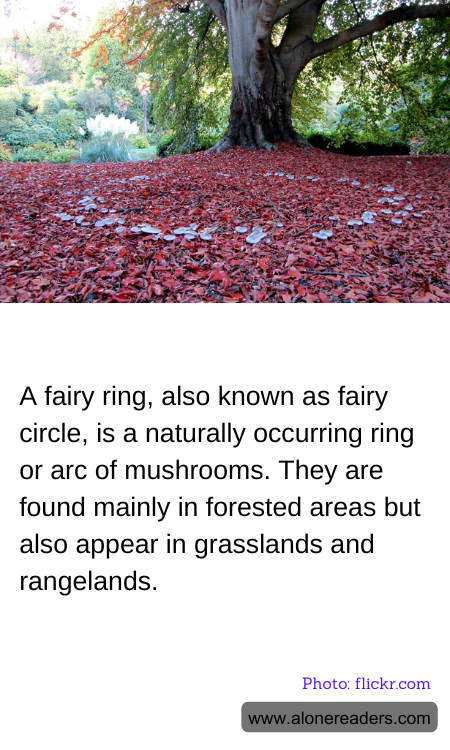
More About This Card
A fairy ring, also known as a fairy circle, is a captivating natural phenomenon that has intrigued humans for centuries. These enchanting formations are rings or arcs of mushrooms that appear mysteriously overnight, often sparking the imagination with tales of magic and folklore. Found predominantly in forested areas, fairy rings can also grace grasslands and rangelands, adding a touch of wonder to the landscape.
The formation of a fairy ring begins with a single spore from a mushroom, which germinates and grows into a network of mycelium beneath the soil. As the mycelium expands outward, it depletes the nutrients in the soil, eventually forming a circular pattern. Mushrooms, the fruiting bodies of the mycelium, sprout at the edges of this circle, creating the iconic ring shape. Over time, the ring can grow larger, sometimes reaching several meters in diameter. While the mushrooms themselves are temporary, the mycelium can persist for many years, continuing to produce new rings.
Fairy rings have been the subject of numerous myths and legends throughout history. In European folklore, they were often associated with fairies or elves, who were believed to dance within the circles, leaving behind the rings as evidence of their nocturnal revelries. Some cultures viewed them as portals to the fairy realm, while others considered them to be bad omens or places to be avoided. Despite these superstitions, fairy rings are a natural occurrence, resulting from the growth patterns of fungi.
Scientifically, fairy rings are fascinating examples of ecological interactions. They can be caused by various species of fungi, including the well-known Marasmius oreades, commonly referred to as the fairy ring mushroom. These fungi play a crucial role in ecosystems by breaking down organic matter and recycling nutrients back into the soil. However, in managed landscapes like lawns or golf courses, fairy rings can be seen as nuisances, as they may cause uneven growth or discoloration of grass.
The presence of a fairy ring can also indicate the health of an ecosystem. In forests, they contribute to the biodiversity and functioning of the habitat, supporting a wide range of organisms. In grasslands, they can enhance soil fertility and promote plant growth. Observing a fairy ring in its natural setting offers a glimpse into the complex and interconnected world of fungi and their role in nature.
Whether viewed through the lens of science or folklore, fairy rings continue to captivate and inspire. They remind us of the hidden wonders of the natural world and the intricate processes that occur beneath our feet. For those who stumble upon a fairy ring during a walk in the woods or across a meadow, it is a moment to pause and appreciate the magic of nature, where the ordinary becomes extraordinary.