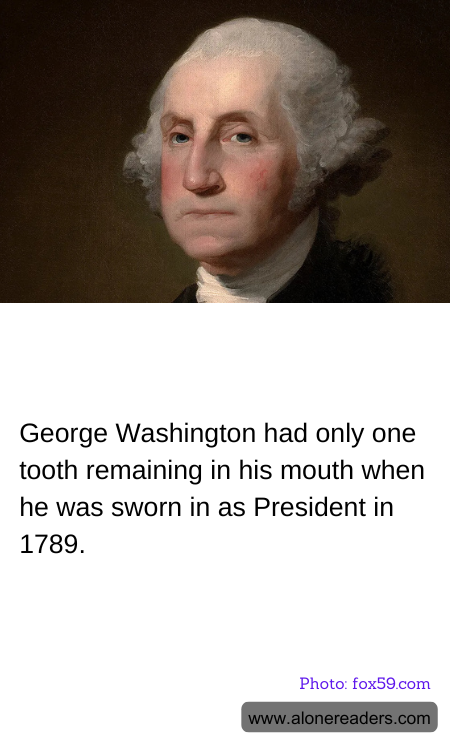
George Washington, the first President of the United States, is often remembered for his leadership and the pivotal role he played in the founding of the nation. However, a lesser-known fact about Washington is that when he was sworn in as President in 1789, he had only one tooth remaining in his mouth. This intriguing detail about Washington's dental health offers a glimpse into the challenges of 18th-century medicine and personal care.
Throughout his life, Washington struggled with dental problems. By the time he took office, he had lost most of his teeth due to a combination of poor dental hygiene, disease, and the rudimentary dental care available at the time. Dental care in the 18th century was primitive by today's standards, with limited understanding of oral hygiene and no access to modern dental tools or treatments. Tooth decay and gum disease were common, and the solutions were often painful and ineffective.
Washington's dental issues were so severe that he resorted to using dentures. Contrary to popular myth, these dentures were not made of wood. Instead, they were crafted from a variety of materials, including human teeth, animal teeth, and ivory, often set in a base of lead or other metals. These dentures were uncomfortable and cumbersome, causing Washington significant discomfort. Despite this, he persevered, maintaining his dignity and composure in public life.
The impact of Washington's dental problems extended beyond physical discomfort. His self-consciousness about his appearance and speech was well-documented. He was known to be reserved in social settings, partly due to the embarrassment caused by his ill-fitting dentures. This aspect of his life humanizes the iconic figure, reminding us that even great leaders face personal challenges.
Washington's dental struggles also highlight the broader context of health and medicine in the 18th century. At the time, there was little understanding of the importance of dental hygiene, and preventive care was virtually nonexistent. The lack of effective treatments meant that many people, not just Washington, suffered from similar issues. This historical perspective underscores the advancements in dental care and hygiene that have since transformed oral health.
In reflecting on George Washington's dental woes, we gain insight into the personal trials he endured while leading a nation. His ability to overcome such challenges and focus on his duties as President is a testament to his resilience and dedication. Washington's story serves as a reminder of the progress made in medical science and the importance of maintaining good health, both for individuals and society as a whole.
