More About This Card
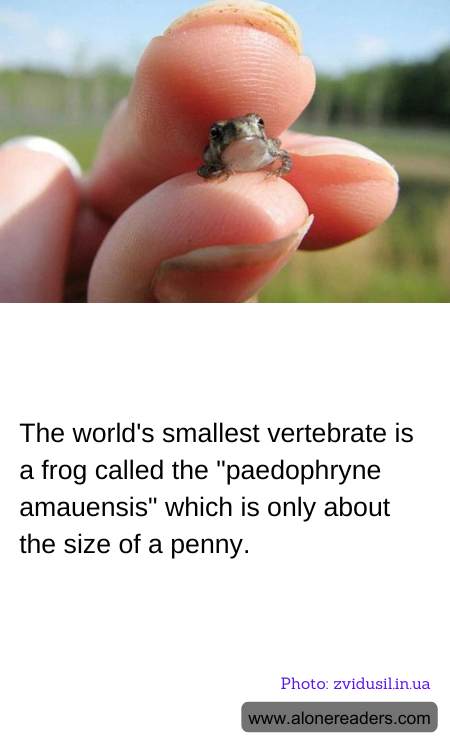
In the vast tapestry of Earth's biodiversity, the paedophryne amauensis stands out as a remarkable testament to nature's ingenuity. Discovered in 2009 in the lush rainforests of Papua New Guinea, this tiny frog has captured the fascination of scientists and nature enthusiasts alike. Measuring a mere 7.7 millimeters in length, the paedophryne amauensis holds the title of the world's smallest vertebrate, a distinction that underscores the incredible diversity of life on our planet.
Despite its diminutive size, the paedophryne amauensis plays a significant role in its ecosystem. This tiny amphibian thrives in the moist leaf litter of the forest floor, where it is perfectly adapted to its environment. Its small size allows it to navigate the dense underbrush with ease, evading predators and efficiently hunting for its primary diet of tiny invertebrates. The frog's ability to blend seamlessly into its surroundings is a testament to the evolutionary pressures that have shaped its existence.
The discovery of the paedophryne amauensis has provided scientists with valuable insights into the evolutionary biology of vertebrates. Its size challenges previous notions about the limitations of vertebrate physiology and raises intriguing questions about the evolutionary pathways that lead to such extreme miniaturization. Researchers are particularly interested in understanding how this frog's internal organs and systems have adapted to function at such a small scale, offering potential insights into the broader principles of vertebrate biology.
Beyond its scientific significance, the paedophryne amauensis serves as a poignant reminder of the importance of conservation. The rainforests of Papua New Guinea, like many of the world's biodiverse regions, face threats from deforestation and habitat loss. Protecting these habitats is crucial not only for the survival of the paedophryne amauensis but also for the myriad other species that call these forests home. Conservation efforts are essential to preserve the delicate balance of these ecosystems and ensure that future generations can continue to marvel at the wonders of nature.
In a world where the largest and most charismatic animals often capture the spotlight, the paedophryne amauensis reminds us that even the smallest creatures have their own stories to tell. Its existence challenges us to look closer at the natural world and appreciate the intricate web of life that sustains our planet. As we continue to explore and understand the diversity of life on Earth, the paedophryne amauensis stands as a symbol of the hidden wonders that await discovery in the most unexpected places.