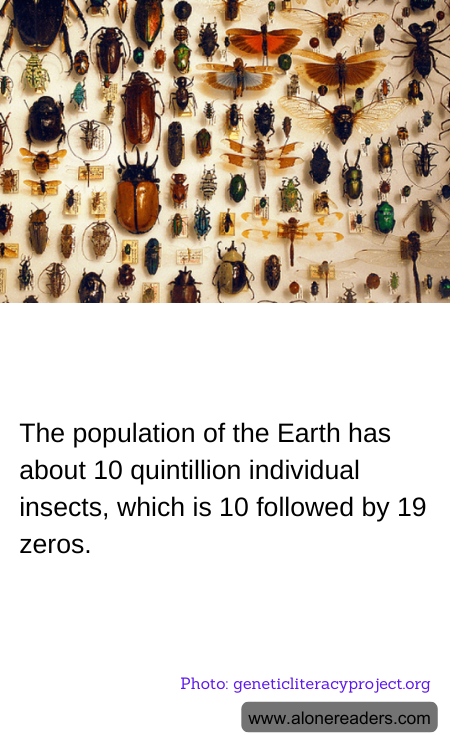
In the vast tapestry of life that blankets our planet, insects play a role that is both profound and astonishing. With an estimated population of about 10 quintillion, or 10 followed by 19 zeros, these tiny creatures outnumber humans by a staggering margin. This immense number is not just a testament to their resilience and adaptability but also highlights their critical importance in maintaining ecological balance.
Insects are among the most diverse groups of organisms on Earth, with over a million described species and potentially millions more yet to be discovered. They inhabit nearly every corner of the globe, from the depths of rainforests to the arid expanses of deserts, and even the icy reaches of the polar regions. This incredible adaptability is a key factor in their vast numbers, allowing them to thrive in environments that are inhospitable to many other forms of life.
The sheer number of insects plays a crucial role in various ecological processes. They are indispensable pollinators, with bees, butterflies, and beetles facilitating the reproduction of countless plant species, including many that are vital to human agriculture. Without these industrious pollinators, the world would face a dramatic decline in food production and biodiversity.
Insects also serve as a fundamental component of the food web. They are a primary food source for a multitude of animals, including birds, amphibians, reptiles, and mammals. This makes them essential for the survival of many species, contributing to the rich tapestry of life on Earth. Moreover, insects are nature's recyclers, breaking down dead organic matter and returning nutrients to the soil, which supports plant growth and sustains ecosystems.
Despite their importance, insects are often overlooked or even maligned due to their small size and sometimes pesky nature. However, their decline due to habitat loss, pollution, and climate change poses a significant threat to global biodiversity and ecosystem health. Conservation efforts are increasingly recognizing the need to protect these vital creatures, emphasizing the importance of preserving their habitats and understanding their ecological roles.
In conclusion, the staggering number of insects on Earth is a testament to their evolutionary success and ecological significance. As we continue to explore and understand the natural world, it is crucial to appreciate the vital roles these tiny creatures play in sustaining life on our planet. By fostering a greater awareness and appreciation for insects, we can ensure that they continue to thrive and support the intricate web of life that sustains us all.
