More About This Card
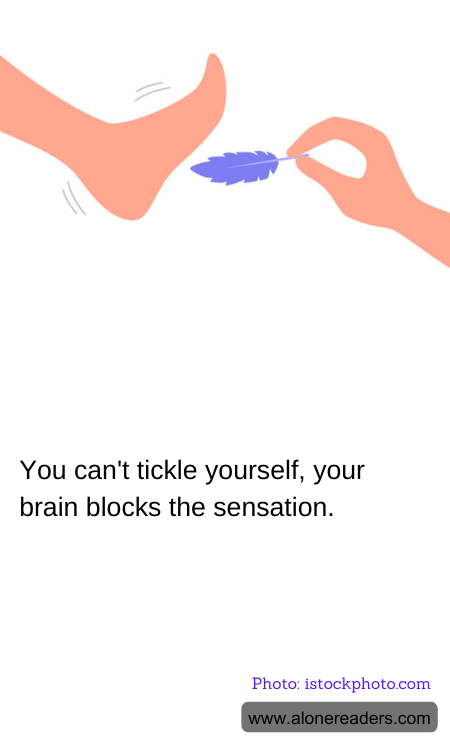
Tickling is a curious phenomenon that has intrigued humans for centuries. It is a sensation that can evoke laughter and joy, yet it remains elusive when we attempt to induce it upon ourselves. The reason behind this intriguing inability to tickle oneself lies within the complex workings of the human brain.
When someone else tickles you, your brain perceives it as an unexpected and external stimulus. This unpredictability is key to the tickling sensation. The brain's somatosensory cortex, which processes touch, and the anterior cingulate cortex, which is involved in emotional responses, are activated. This combination of surprise and sensory processing often results in laughter or a reflexive reaction.
However, when you try to tickle yourself, your brain is one step ahead. The cerebellum, a part of the brain responsible for motor control, plays a crucial role in this process. It predicts the sensory consequences of your own movements and sends a signal to the somatosensory cortex to dampen the response. This prediction mechanism is so precise that it effectively cancels out the tickling sensation, as the brain recognizes the touch as self-generated and not a threat or surprise.
This ability of the brain to distinguish between self-generated and external stimuli is essential for our daily functioning. It allows us to interact with the world without being overwhelmed by our own movements. For instance, if the brain did not have this predictive capability, simple actions like walking or typing could become disorienting, as the constant self-touch would be perceived as external stimuli.
Interestingly, this phenomenon also highlights the brain's remarkable ability to adapt and protect us. By blocking the sensation of self-tickling, the brain ensures that we remain responsive to external threats or interactions that might require our immediate attention. This evolutionary trait has likely played a role in our survival, as it helps us prioritize unexpected stimuli over predictable ones.
While the inability to tickle oneself might seem like a trivial quirk, it underscores the sophistication of the human brain. It is a testament to the intricate systems that govern our sensory experiences and the delicate balance they maintain to keep us attuned to our environment. So, the next time you find yourself giggling uncontrollably from a friend's tickling fingers, remember that it's your brain's way of keeping you engaged with the world around you.