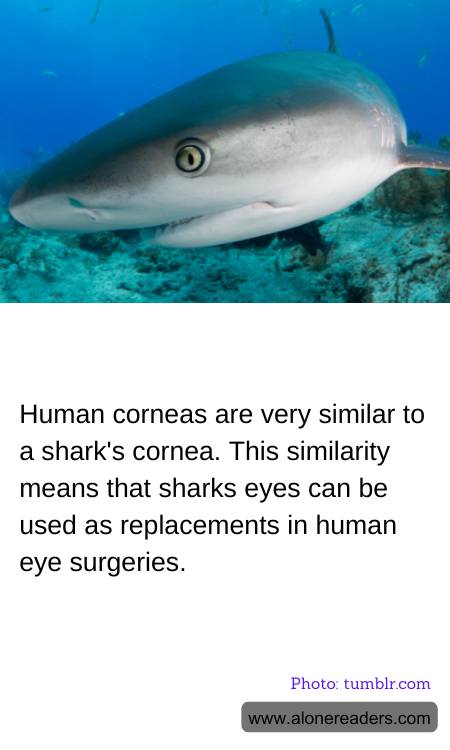
The human eye is a marvel of biological engineering, allowing us to perceive the world in vibrant detail. However, when it comes to the structure of the cornea, humans share an unexpected similarity with a creature of the deep: the shark. This fascinating connection has opened up intriguing possibilities in the field of ophthalmology, particularly in the realm of corneal transplants.
The cornea is the transparent front part of the eye that covers the iris, pupil, and anterior chamber. It plays a crucial role in focusing vision. In both humans and sharks, the cornea is composed of similar layers and collagen fibers, which contribute to its transparency and strength. This structural resemblance has led scientists to explore the potential of using shark corneas as substitutes in human eye surgeries.
Sharks have been swimming in the oceans for over 400 million years, and their eyes have evolved to withstand the harsh marine environment. This durability makes their corneas particularly appealing for medical use. In cases where human corneas are damaged due to injury or disease, a transplant is often necessary to restore vision. However, the availability of human donor corneas is limited, and the demand far exceeds supply. This is where the shark's cornea comes into play as a potential alternative.
Research has shown that shark corneas can be successfully transplanted into human eyes, offering a viable solution to the shortage of human donor tissue. The procedure involves carefully removing the damaged human cornea and replacing it with a shark cornea, which is then sutured into place. The similarity in structure means that the human body is less likely to reject the shark cornea, and patients can experience significant improvements in vision.
While the idea of using shark corneas in human eye surgeries may seem unconventional, it is a testament to the innovative approaches being explored in modern medicine. This method not only addresses the shortage of human donor corneas but also highlights the interconnectedness of life on Earth, where even the most unexpected species can contribute to human health and well-being.
As research continues, the use of shark corneas in eye surgeries could become more widespread, offering hope to those suffering from corneal blindness. This development underscores the importance of preserving marine life, as the biodiversity of our oceans holds untapped potential for medical advancements. By understanding and respecting the natural world, we can uncover solutions that benefit both humans and the environment.
