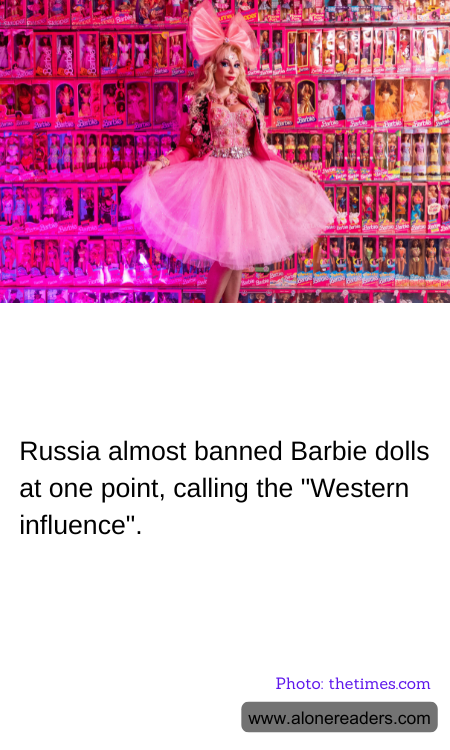
In the late 1990s, Russia found itself at a cultural crossroads, grappling with the influx of Western consumer goods and ideas following the dissolution of the Soviet Union. Among the many symbols of Western influence that entered the Russian market, the iconic Barbie doll became a focal point of controversy. At one point, Russian authorities considered banning Barbie dolls, viewing them as a potential threat to traditional Russian values and a symbol of Western cultural imperialism.
The Barbie doll, with her glamorous lifestyle and fashionable wardrobe, represented a stark contrast to the Soviet-era toys that Russian children had grown up with. Critics argued that Barbie promoted materialism, unrealistic body standards, and a superficial lifestyle that was at odds with the values that many in Russia held dear. Concerns were raised that Barbie could negatively impact young girls' self-image and aspirations, steering them away from traditional roles and values.
The debate over Barbie was part of a broader discussion about the impact of Western culture on Russian society. In the years following the end of the Soviet Union, Russia was inundated with Western products, media, and ideas. For some, this was a welcome change, offering new opportunities and a connection to the wider world. For others, it was seen as an erosion of Russian culture and identity, with Barbie becoming a convenient scapegoat for these anxieties.
Despite the controversy, Barbie dolls remained popular among Russian children, who were captivated by her allure and the imaginative play she inspired. Parents, too, were divided; while some embraced the doll as a harmless toy, others worried about the values she represented. Ultimately, the proposed ban on Barbie dolls was never enacted, and the toy continued to be sold in Russia, albeit with ongoing debates about its cultural implications.
The Barbie controversy in Russia highlights the complex dynamics of cultural exchange and the challenges of navigating globalization. It serves as a reminder of the tensions that can arise when different cultural values intersect and the ways in which consumer products can become symbols of broader societal issues. Today, Barbie remains a popular toy in Russia, having adapted to the changing cultural landscape by introducing more diverse and inclusive dolls that reflect a wider range of aspirations and identities.
In the end, the story of Barbie in Russia is not just about a doll, but about the broader questions of identity, tradition, and the influence of global culture. It underscores the importance of dialogue and understanding in a world where cultural boundaries are increasingly porous, and where the exchange of ideas and products can both enrich and challenge societies.
