More About This Card
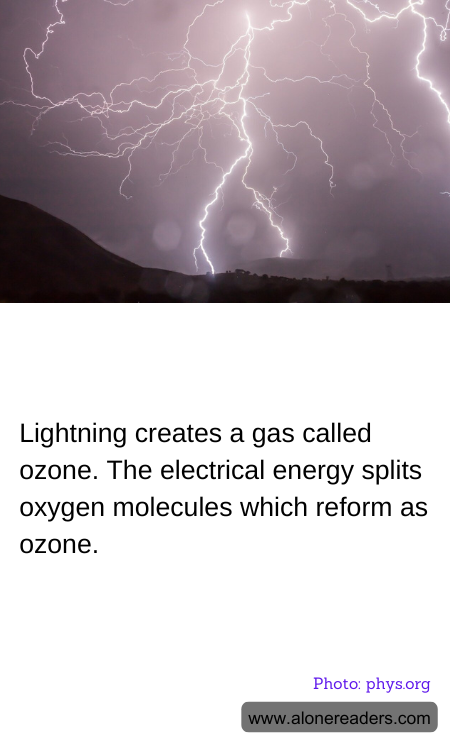
Lightning is one of nature's most spectacular displays, a powerful force that not only illuminates the sky but also plays a crucial role in atmospheric chemistry. When a lightning bolt strikes, it unleashes a tremendous amount of electrical energy, which can have fascinating effects on the air around it. One of the most interesting outcomes of a lightning strike is the creation of ozone, a gas that plays a vital role in protecting life on Earth.
The process begins with the splitting of oxygen molecules. The air we breathe is composed primarily of nitrogen and oxygen, with oxygen molecules typically existing as pairs of atoms, known as O2. When lightning strikes, the intense electrical energy it releases is enough to break these oxygen molecules apart. This process is known as dissociation. The freed oxygen atoms are highly reactive and quickly seek to stabilize by bonding with other oxygen molecules. This results in the formation of ozone, or O3, a molecule consisting of three oxygen atoms.
Ozone is a crucial component of our atmosphere, particularly in the stratosphere, where it forms the ozone layer. This layer acts as a shield, absorbing the majority of the sun's harmful ultraviolet radiation and preventing it from reaching the Earth's surface. Without this protective layer, life as we know it would be unable to thrive. While the ozone produced by lightning is not enough to significantly replenish the ozone layer, it does contribute to the overall balance of ozone in the atmosphere.
Interestingly, the creation of ozone by lightning is a natural process that has been occurring for millions of years. It is a reminder of the interconnectedness of natural phenomena and the delicate balance that sustains life on our planet. While human activities have led to concerns about ozone depletion, particularly due to the release of chlorofluorocarbons (CFCs) and other pollutants, natural processes like lightning continue to play a role in maintaining atmospheric health.
For those who have experienced the fresh, clean scent in the air following a thunderstorm, they have likely encountered the presence of ozone. This distinctive smell is often described as sharp and slightly metallic, a testament to the powerful forces at work during a lightning storm. While ozone at ground level can be harmful to human health, contributing to respiratory problems and other issues, the small amounts produced by lightning are generally not a cause for concern.
In conclusion, lightning is not only a breathtaking natural phenomenon but also a vital contributor to the Earth's atmospheric processes. By splitting oxygen molecules and forming ozone, lightning helps maintain the delicate balance of gases that protect and sustain life. This remarkable process underscores the importance of understanding and preserving the natural world, ensuring that future generations can continue to marvel at the wonders of nature.